REDUCTION LINOCUT

THE MEDIUM & ITS HISTORY
Reduction linocut is a variation of the standard linocut process that introduces colour and complexity through a single block and an element of irreversible commitment. Rather than carving separate blocks for each colour, the artist works progressively: the block is partially carved, printed in a light colour, then carved further, and printed again in a darker colour. Each pass through the press destroys part of the previous state of the block. This process, which was developed and popularised by Pablo Picasso in the late 1950s, requires the artist to plan each stage in advance, since once a layer of linoleum has been removed, it cannot be recovered. The block is gradually consumed as the print is built up, which means the edition size is determined at the very beginning: however many prints are pulled in the first pass is the maximum possible. The results are richly layered and often visually complex, with colours overlapping and interacting in ways that would be difficult to achieve with separate blocks. The technique demands a particular kind of forward thinking because the image must be imagined in reverse, layer by layer, before a single cut is made.
HOW IT IS MADE
- Plan the colours and register the paper.
- Carve and print the first colour on every sheet.
- Carve away more of the same block.
- Print the next colour in register and repeat.
- Dry and finish the complete edition.
AS A COLLECTOR
Look for overlapping colours and the alignment of successive layers.
IN THE COLLECTION
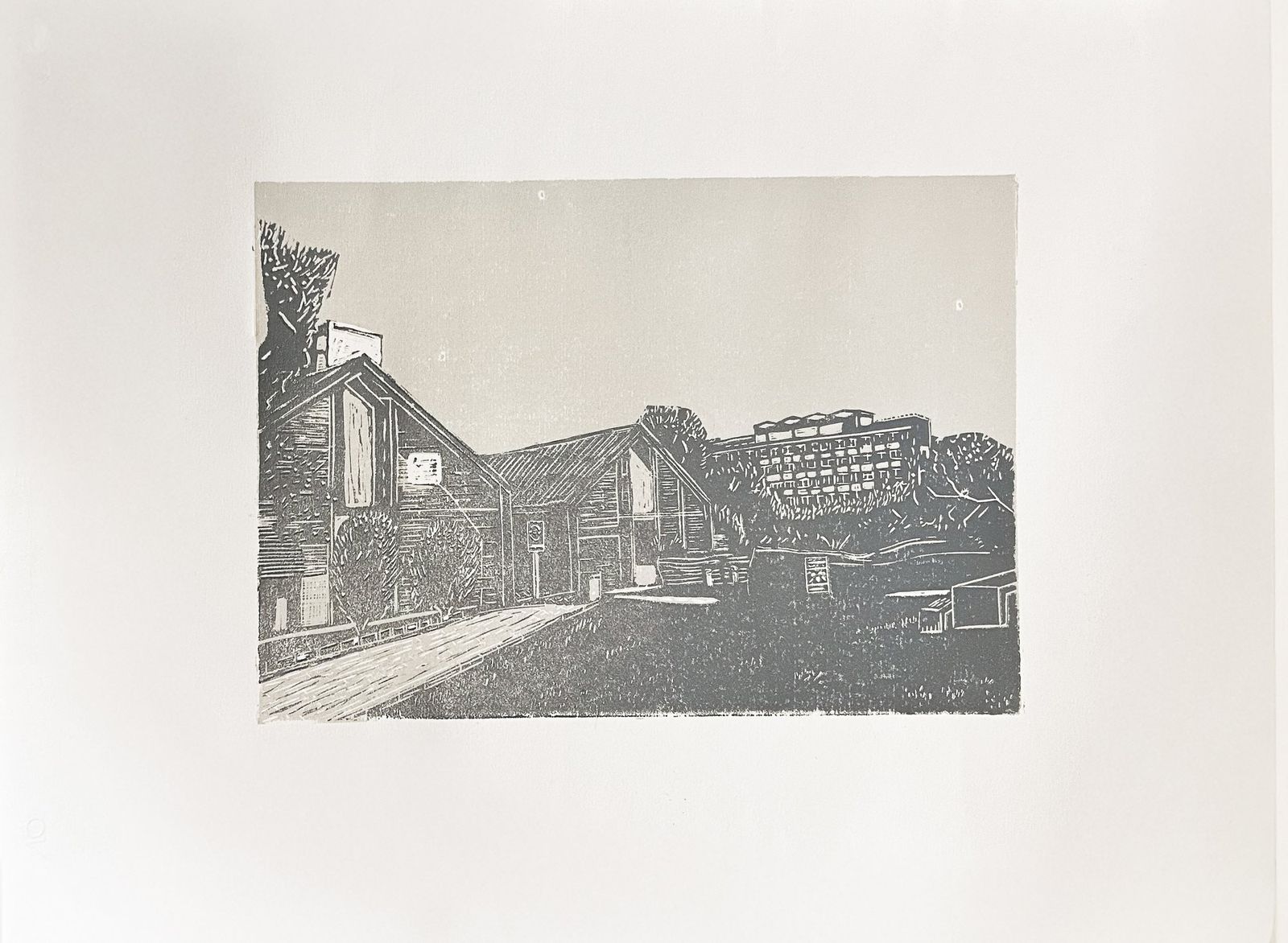
a lens in landscape
Tumelo Brian Mpungose
R4,800
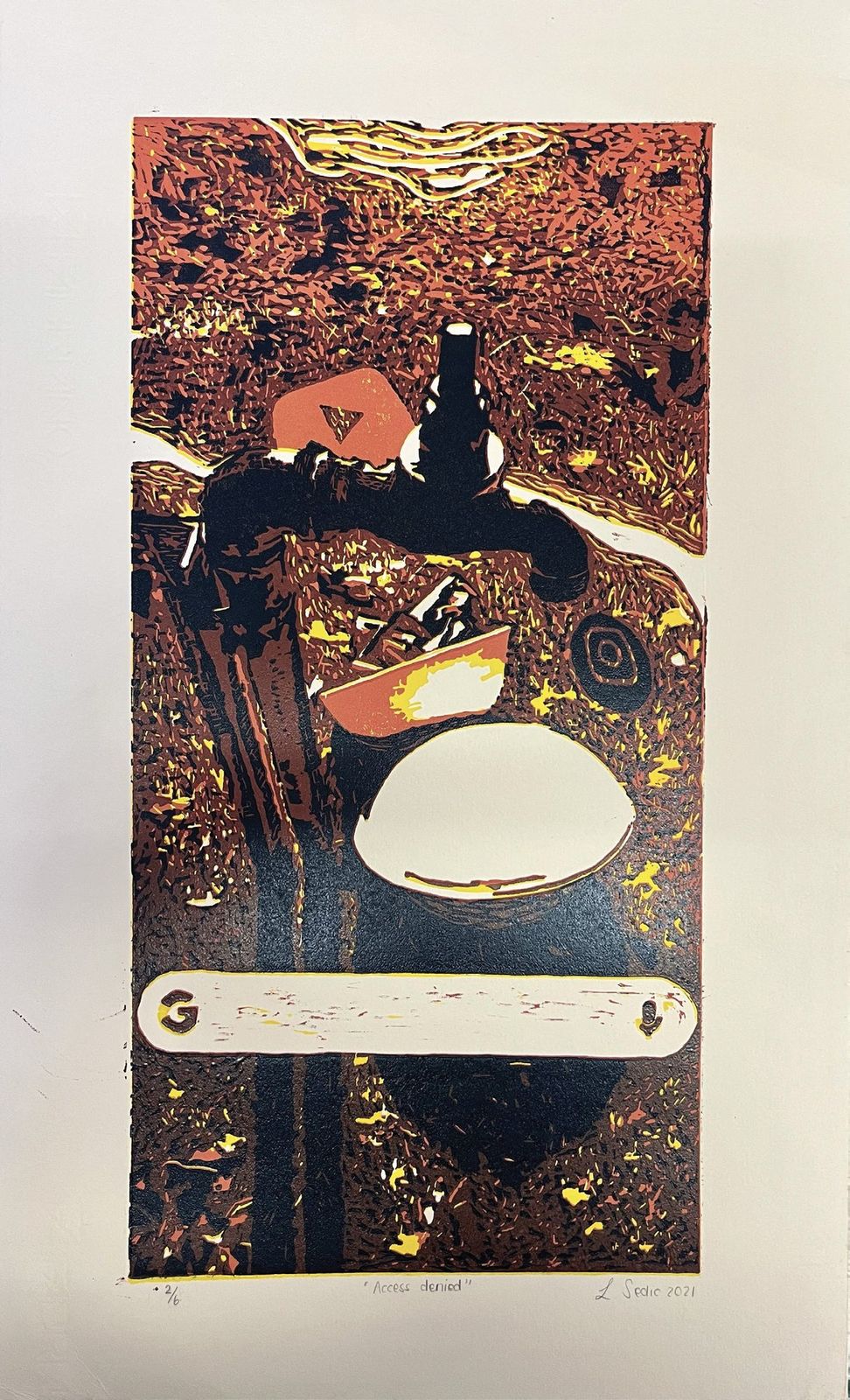
Access Denied
Lesego Sedio
R1,600
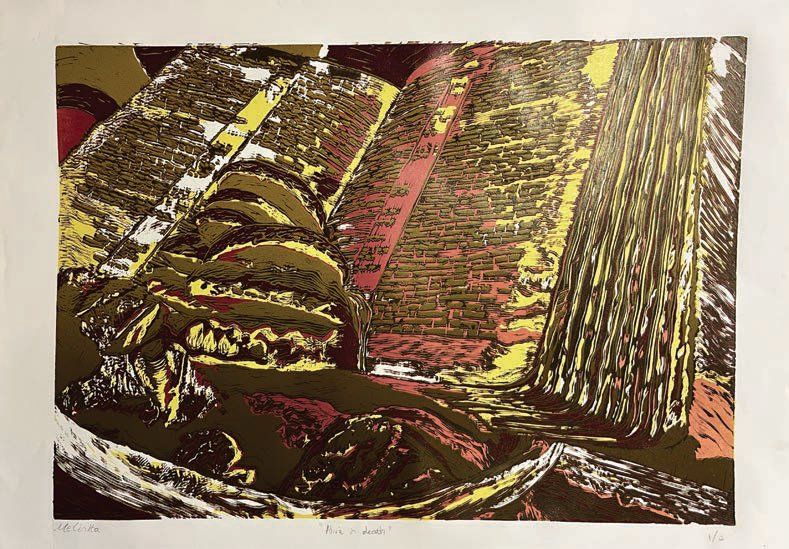
Alive in death
Melinita Walters
R600
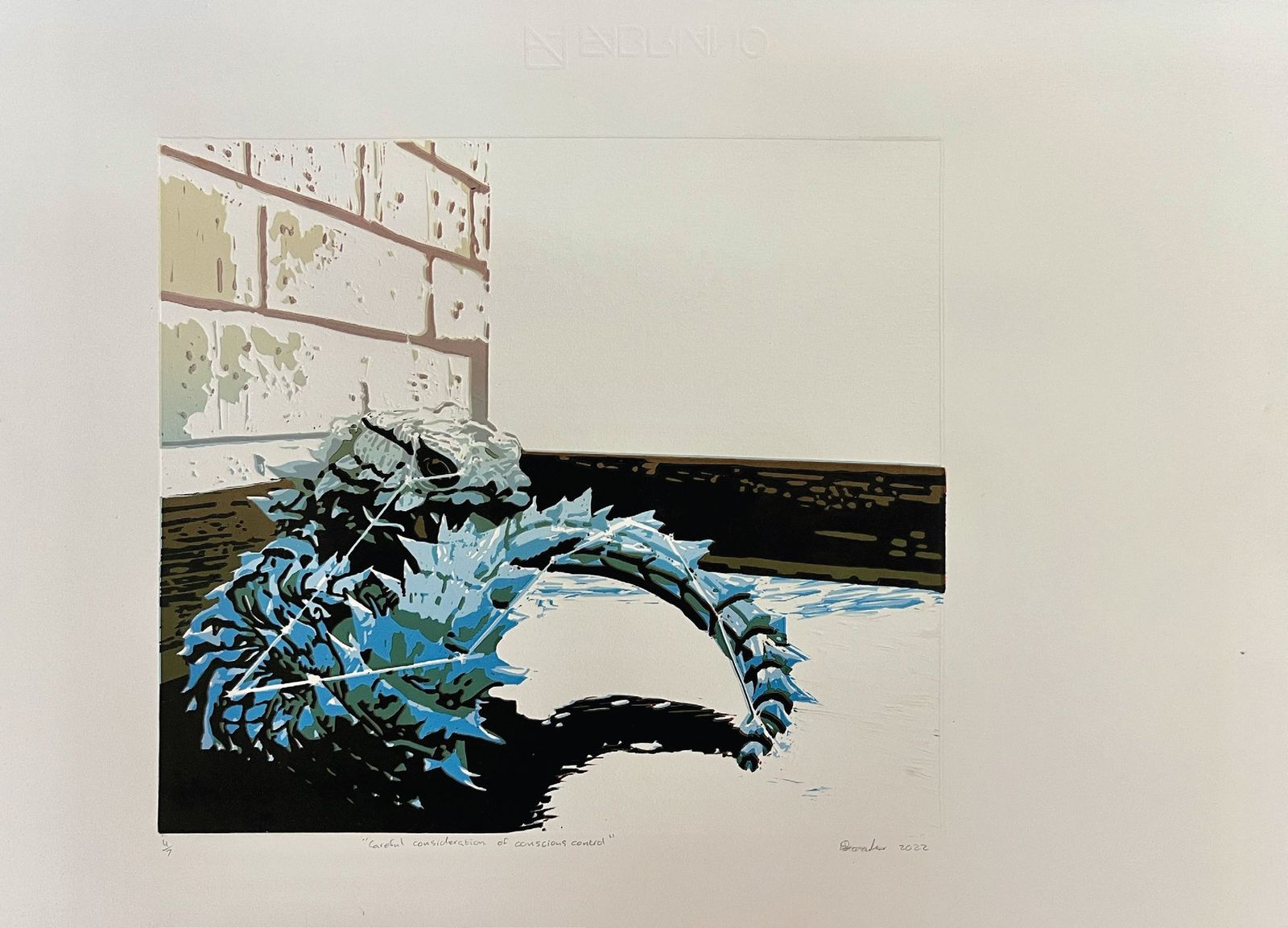
Careful consideration of conscious control
Helen Stewardson
R1,000
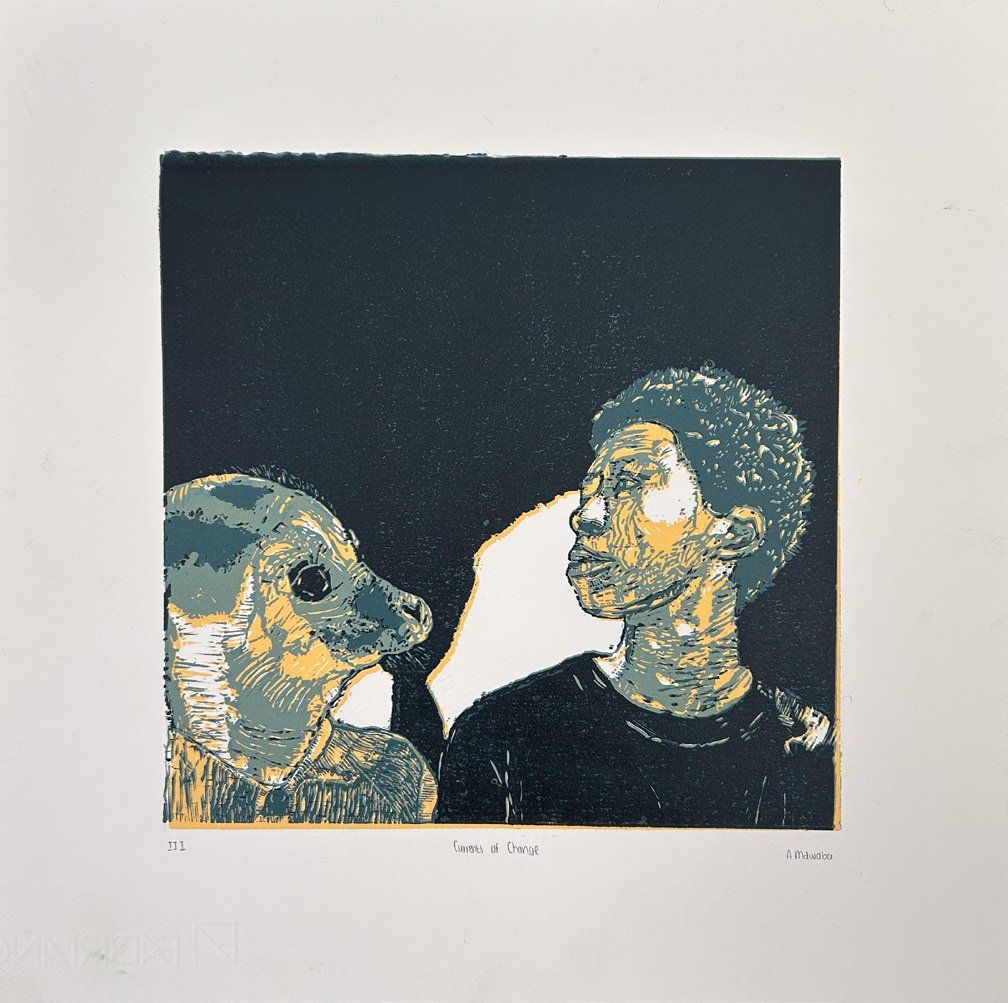

Currents of Change
Abongwe Samkelo Mdwaba
R1,800
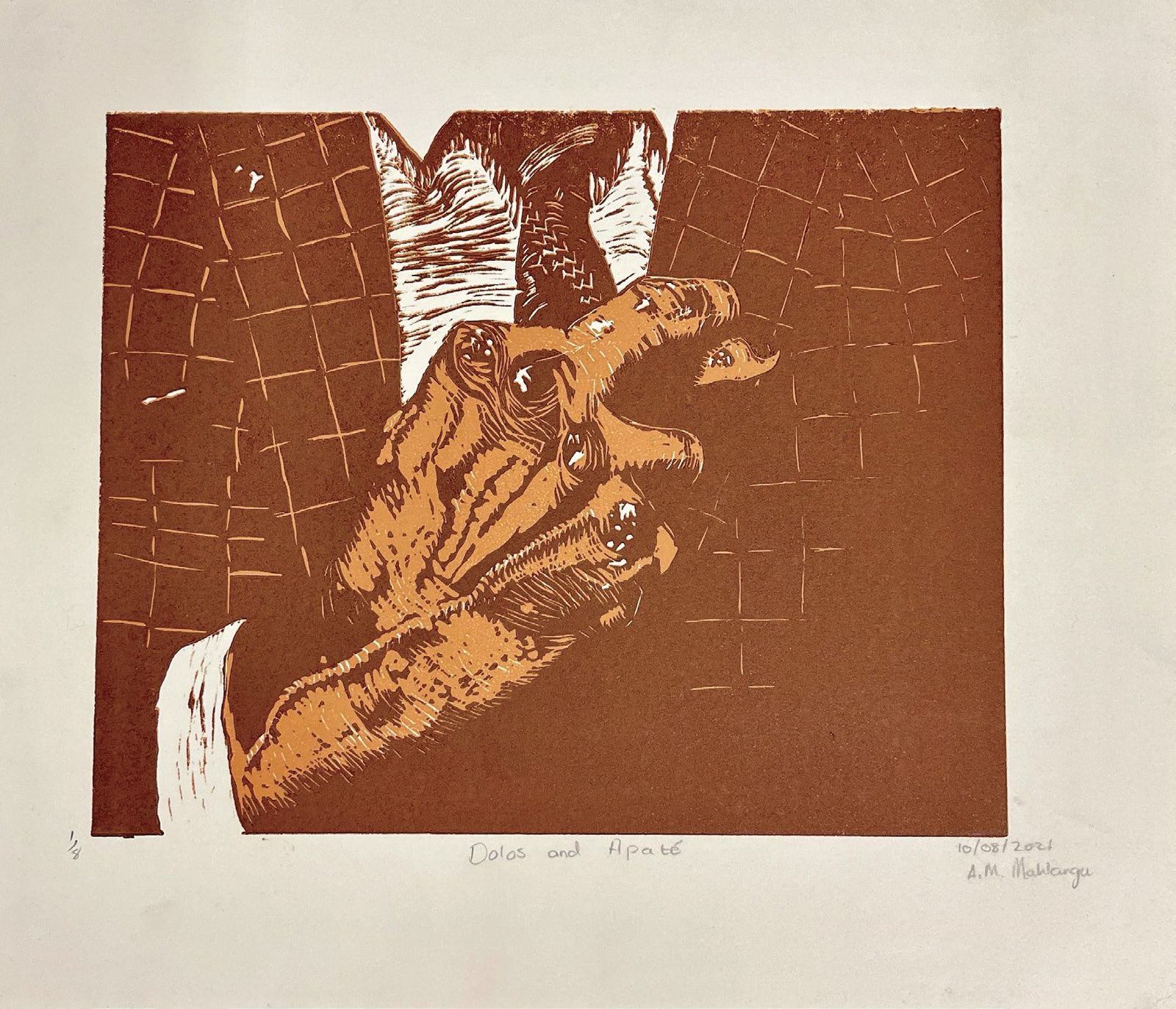
Dolos and Apate
Alex Mahlangu
R800
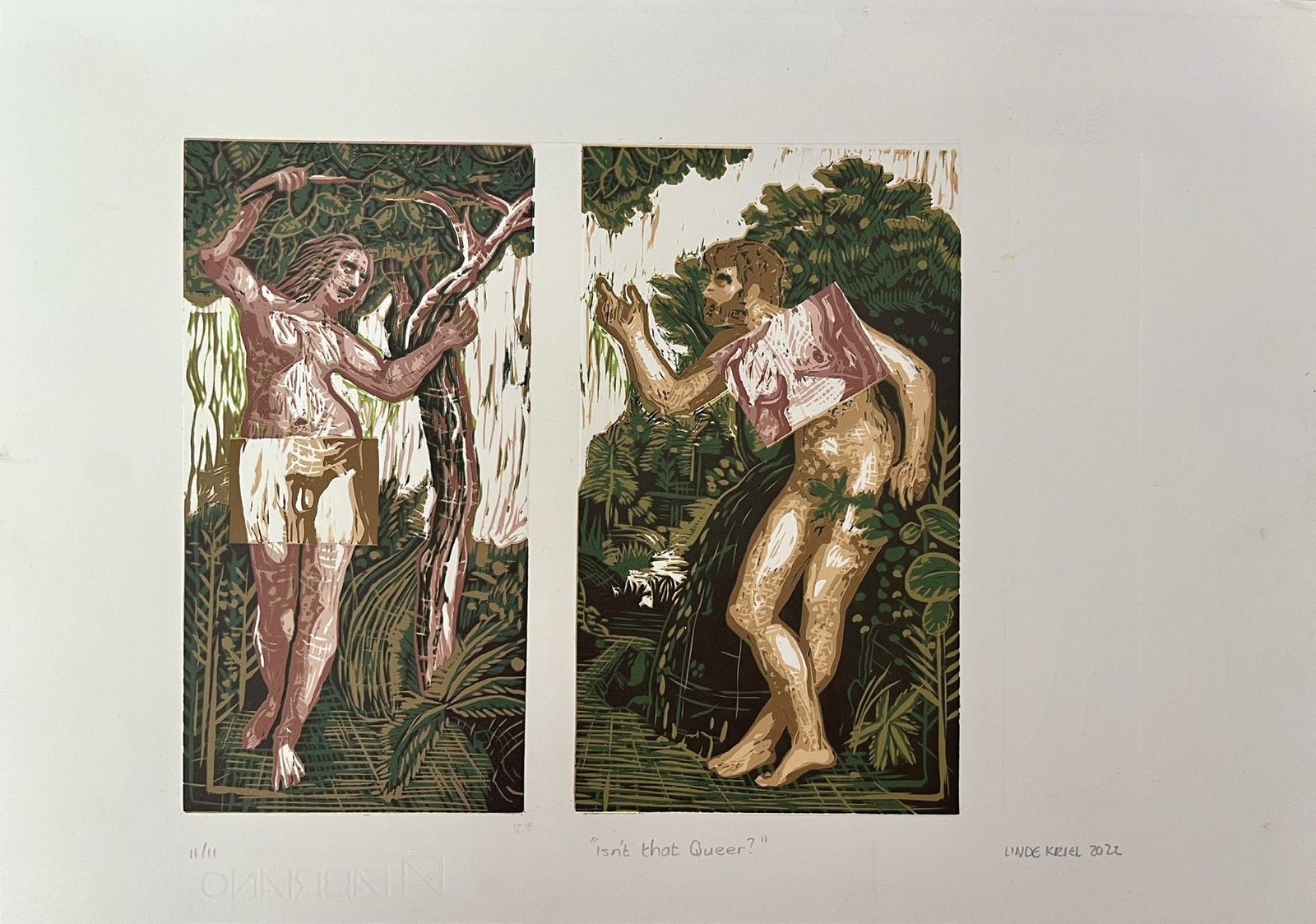
Isn't that Queer?
Linde Kriel
R2,000
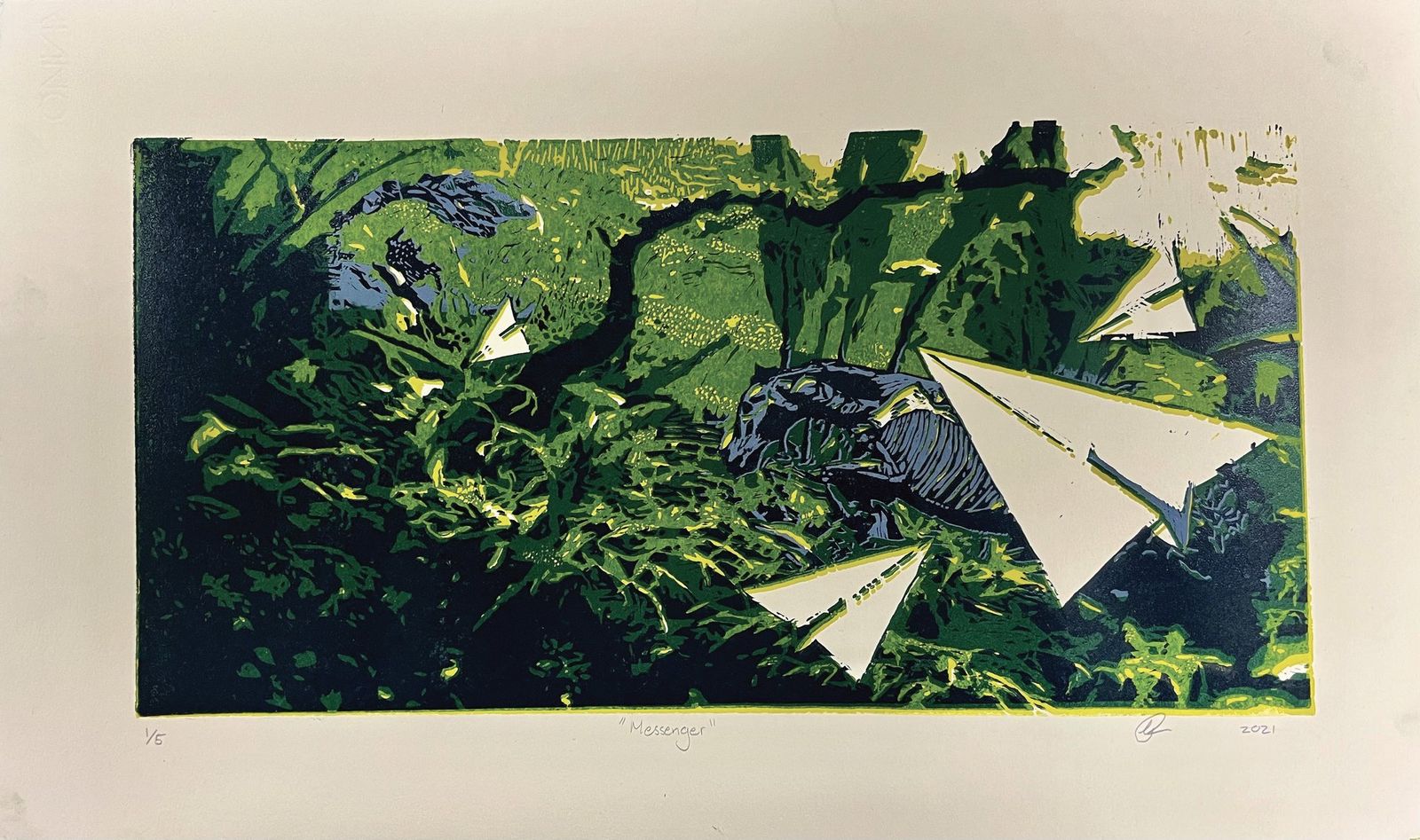
Messenger
Chiara Andriana Gagiano
R2,300
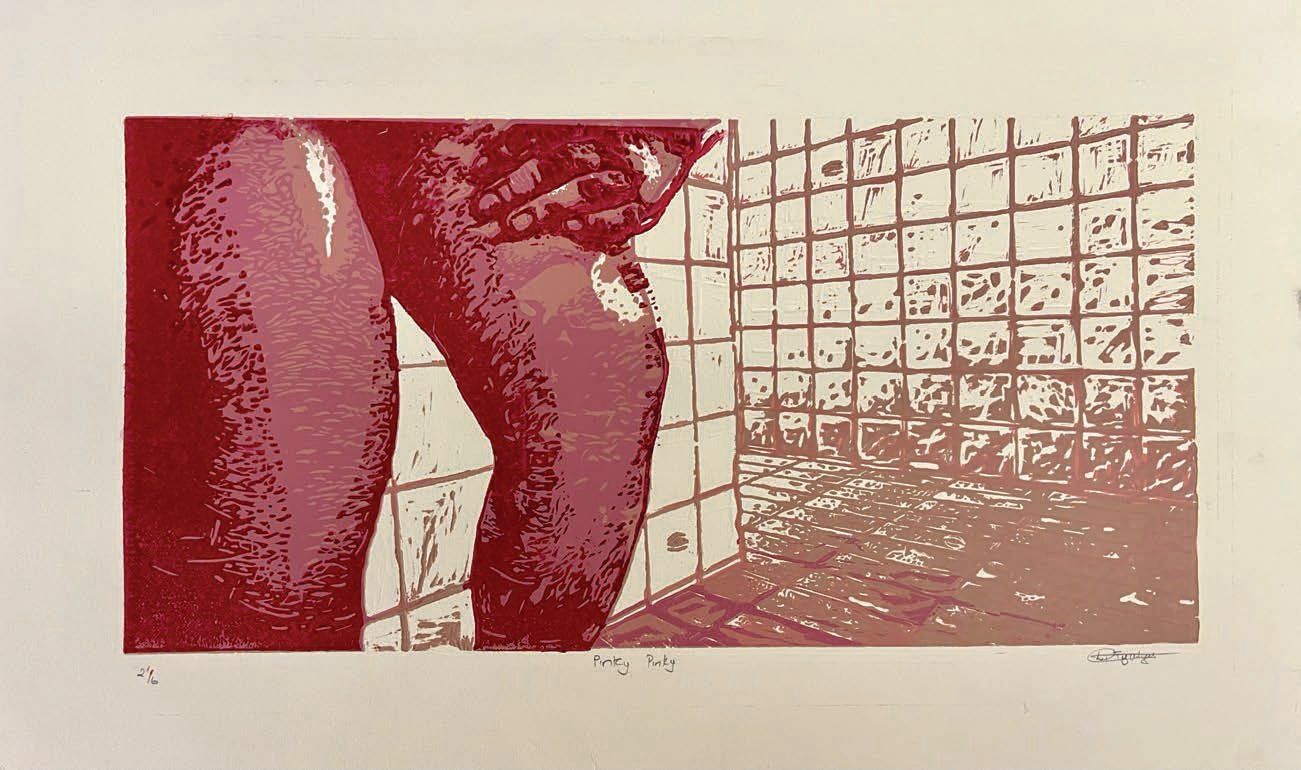
Pinky Pinky
Lonwabo Tyutyu
R600
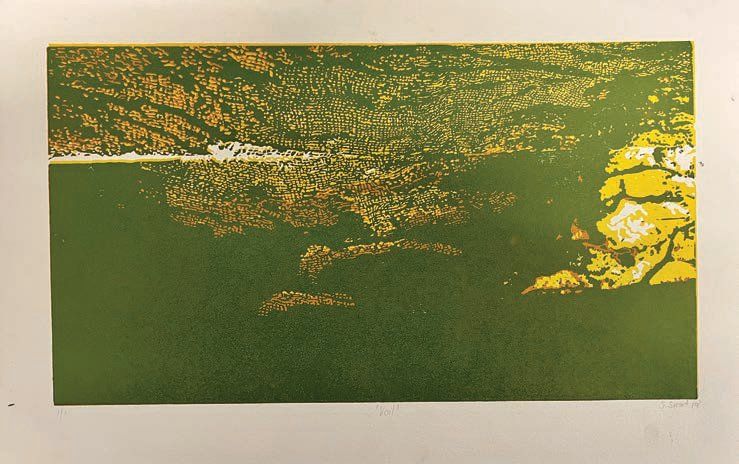
Realm
Siobhan Swart
R400
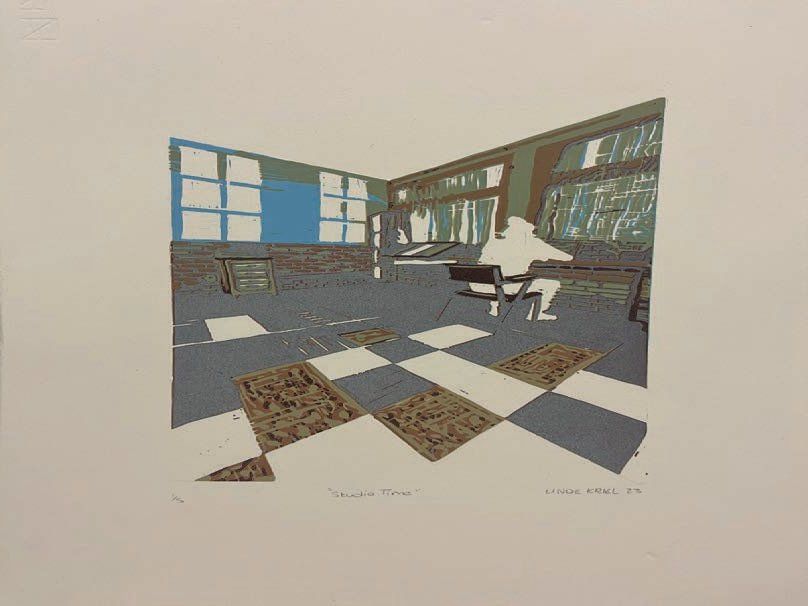
Studio Time
Linde Kriel
R700
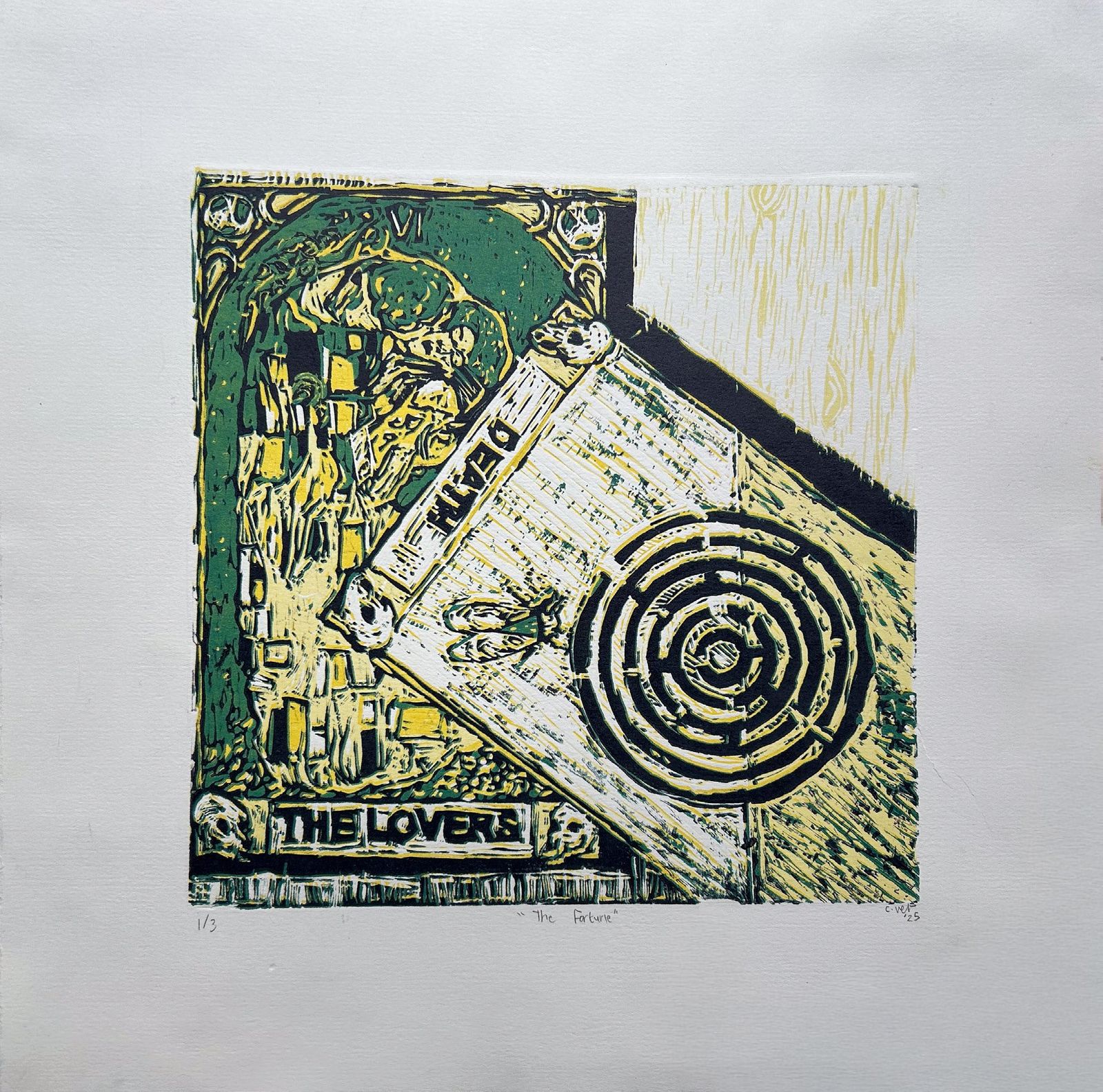
The Fortune
Clarissa Venter
R2,700
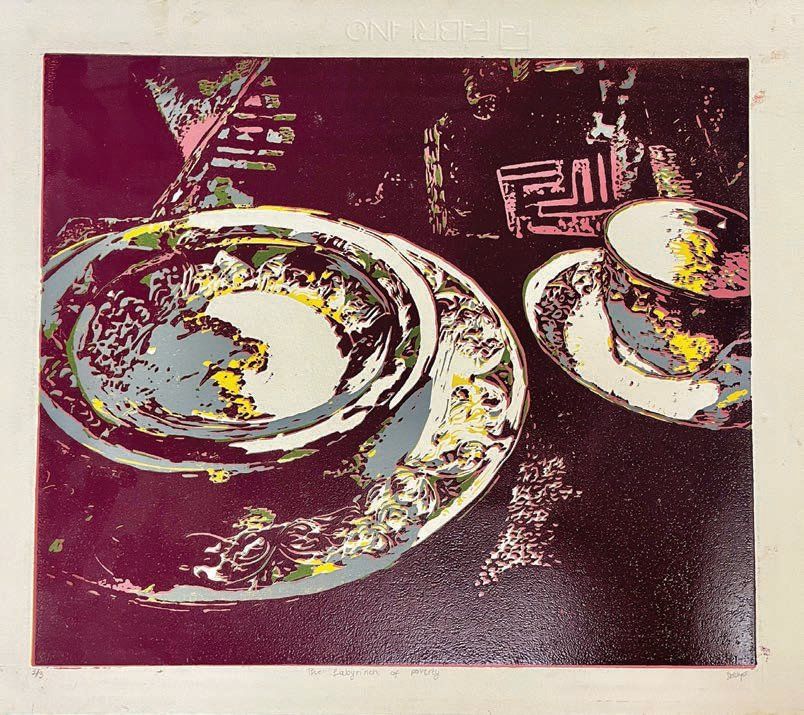
The Labrynth of poverty
Jacobeth Selinga
R550
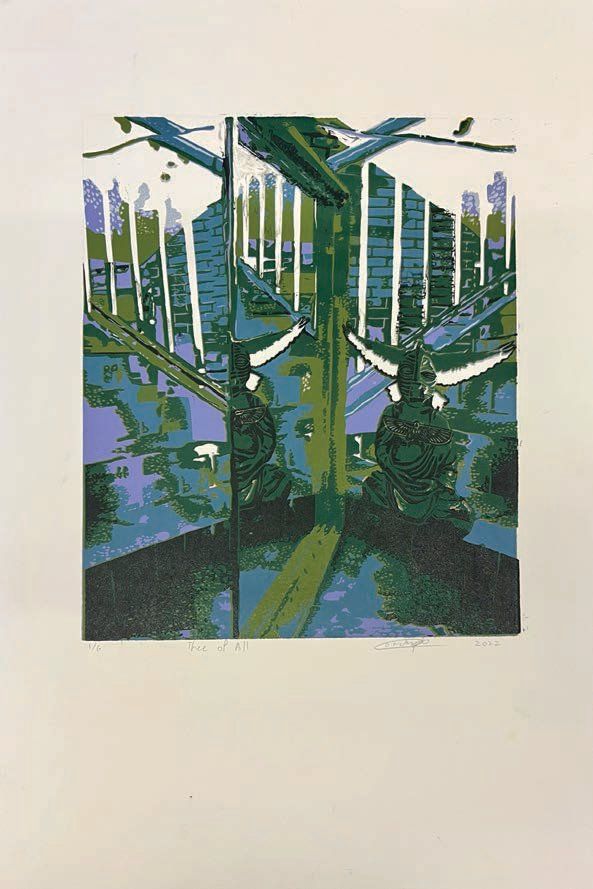
Thee of it all
Ovayo Makapela
R750
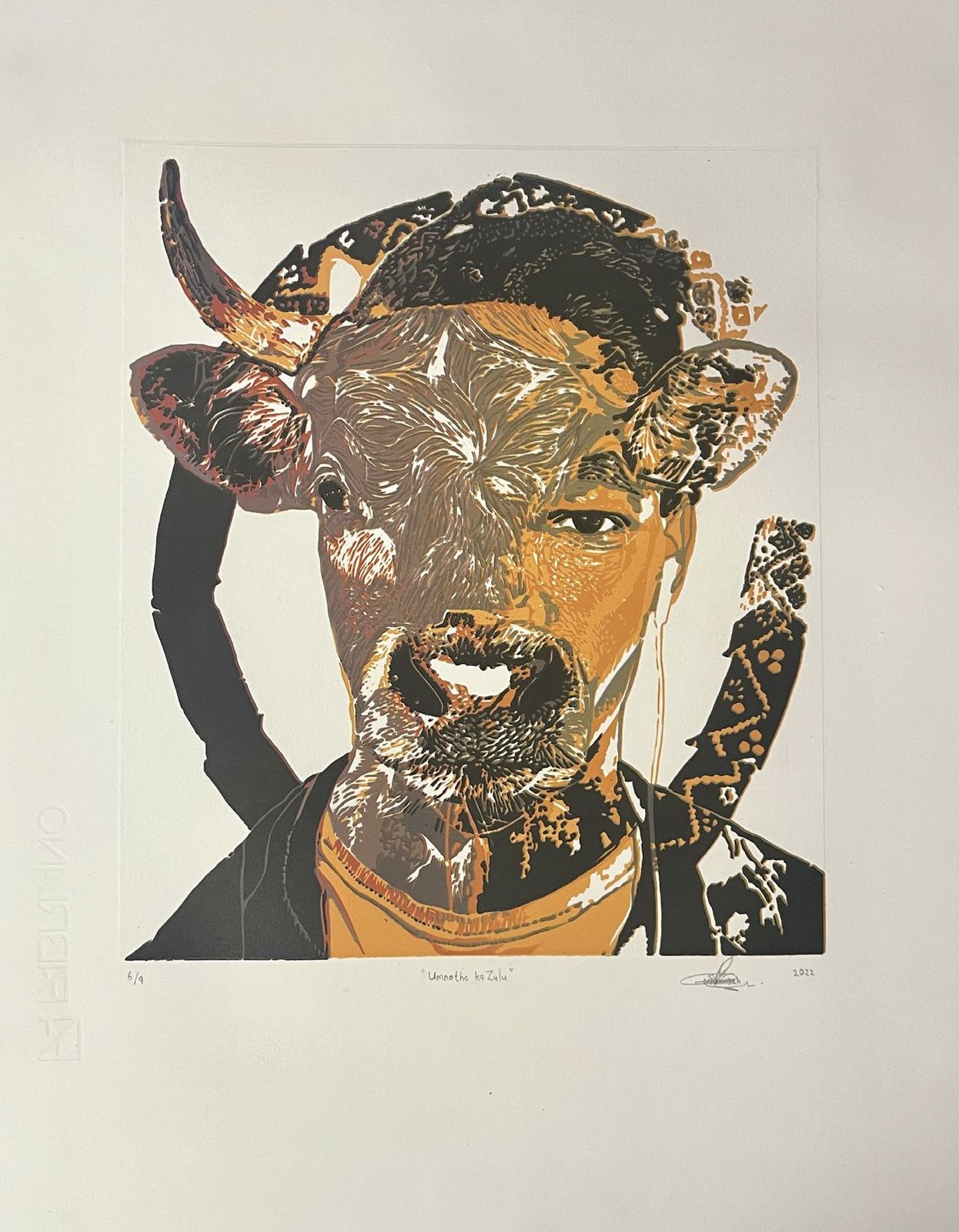
Umnotho kaZulu
Sithandile Mthembu
R1,450
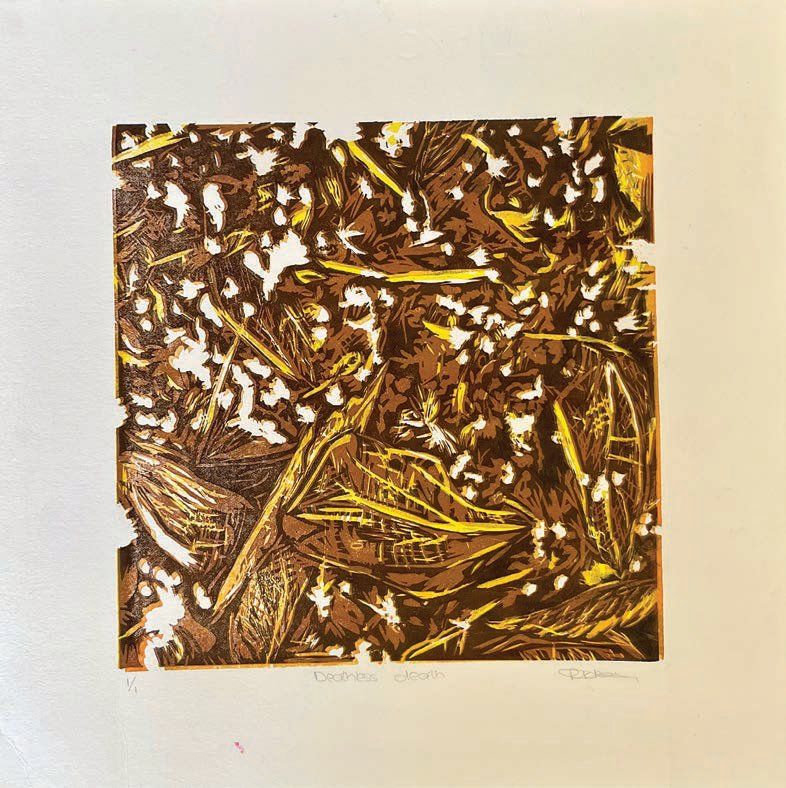
Untitled (reduction linocut)
Kenosi Molehe
R400
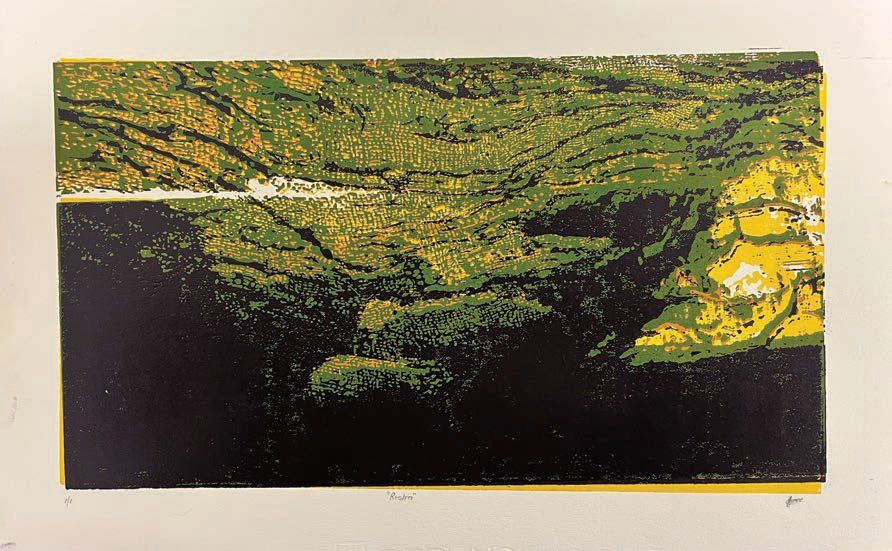
Vail
Siobhan Swart
R500
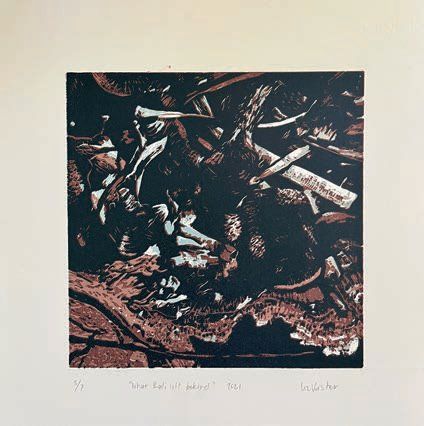
What Kali left behind
Liz Vorster
R650