LITHOGRAPHY
THE MEDIUM & ITS HISTORY
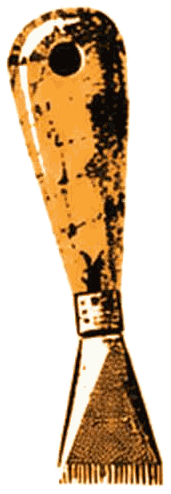
Lithography was invented in 1796 by the Bavarian playwright Alois Senefelder, who discovered that a drawing made with a greasy crayon on a flat limestone surface could be fixed chemically and used to print multiple impressions. It was a revolutionary discovery because unlike relief and intaglio printing, lithography requires no carving or cutting. The image is drawn directly onto the surface, making it the most natural and gestural of all the traditional printmaking techniques. The chemistry is simple: grease and water repel each other. The drawn areas of the stone accept ink; the wet, undrawn areas reject it. When paper is pressed onto the inked surface, the image transfers. Today most lithography is done on aluminium plates rather than stone, which are lighter and easier to process, though stone lithography is still practised and is represented in this exhibition. Lithography rapidly became both a fine art medium as it was used by Daumier, Toulouse-Lautrec, and later Picasso and the basis of commercial printing.
HOW IT IS MADE
- Draw with greasy material on prepared stone or plate.
- Treat the surface to establish ink-accepting and water-accepting areas.
- Dampen the surface and roll on ink.
- Press paper against it to transfer the image.
AS A COLLECTOR
Look for the freedom of drawn marks, from crayon grain to fluid washes.
IN THE COLLECTION
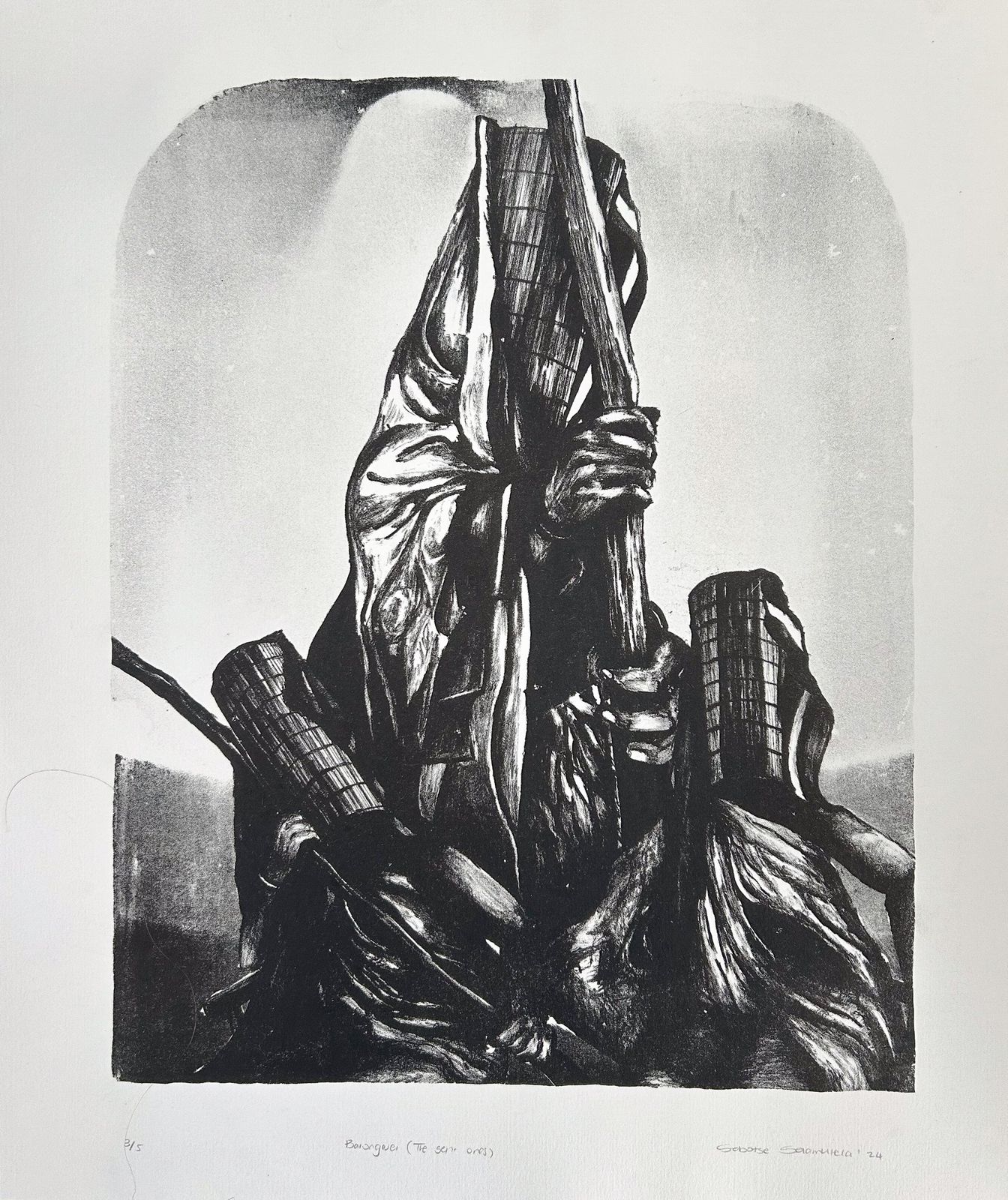
Barongwa
Sebotse Selamulela
R3,500
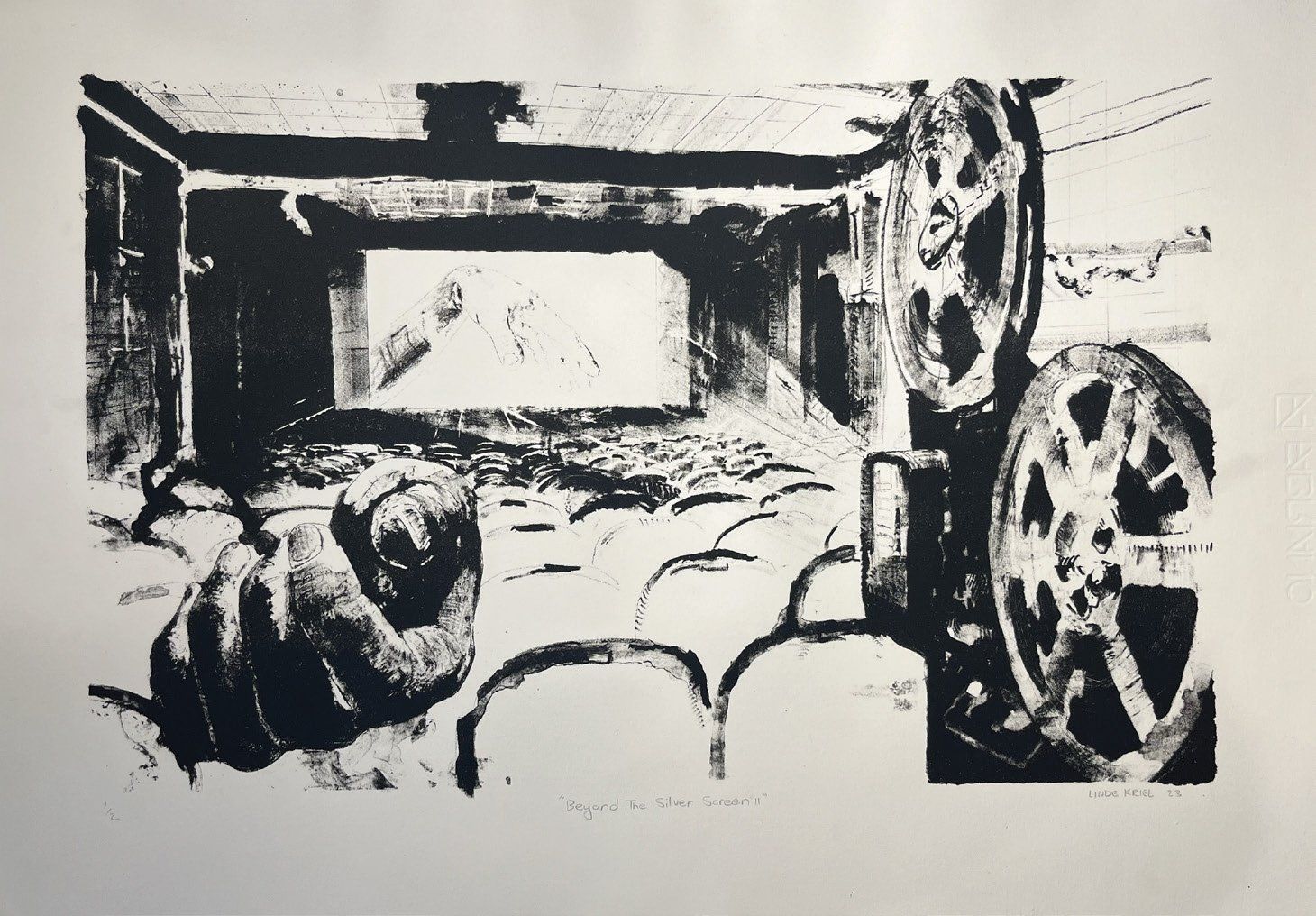
Beyond the Silver Screen II
Linde Kriel
R3,500
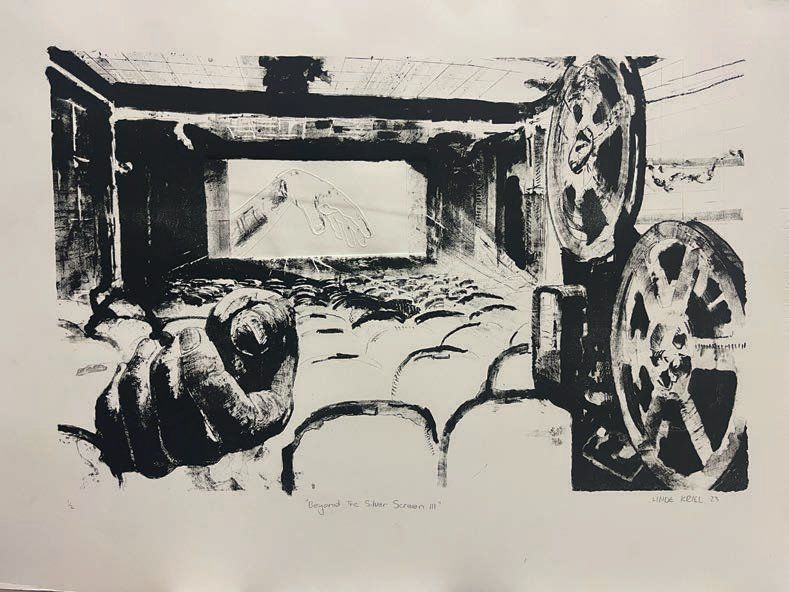
Beyond the Silver Screen III
Linde Kriel
R1,000
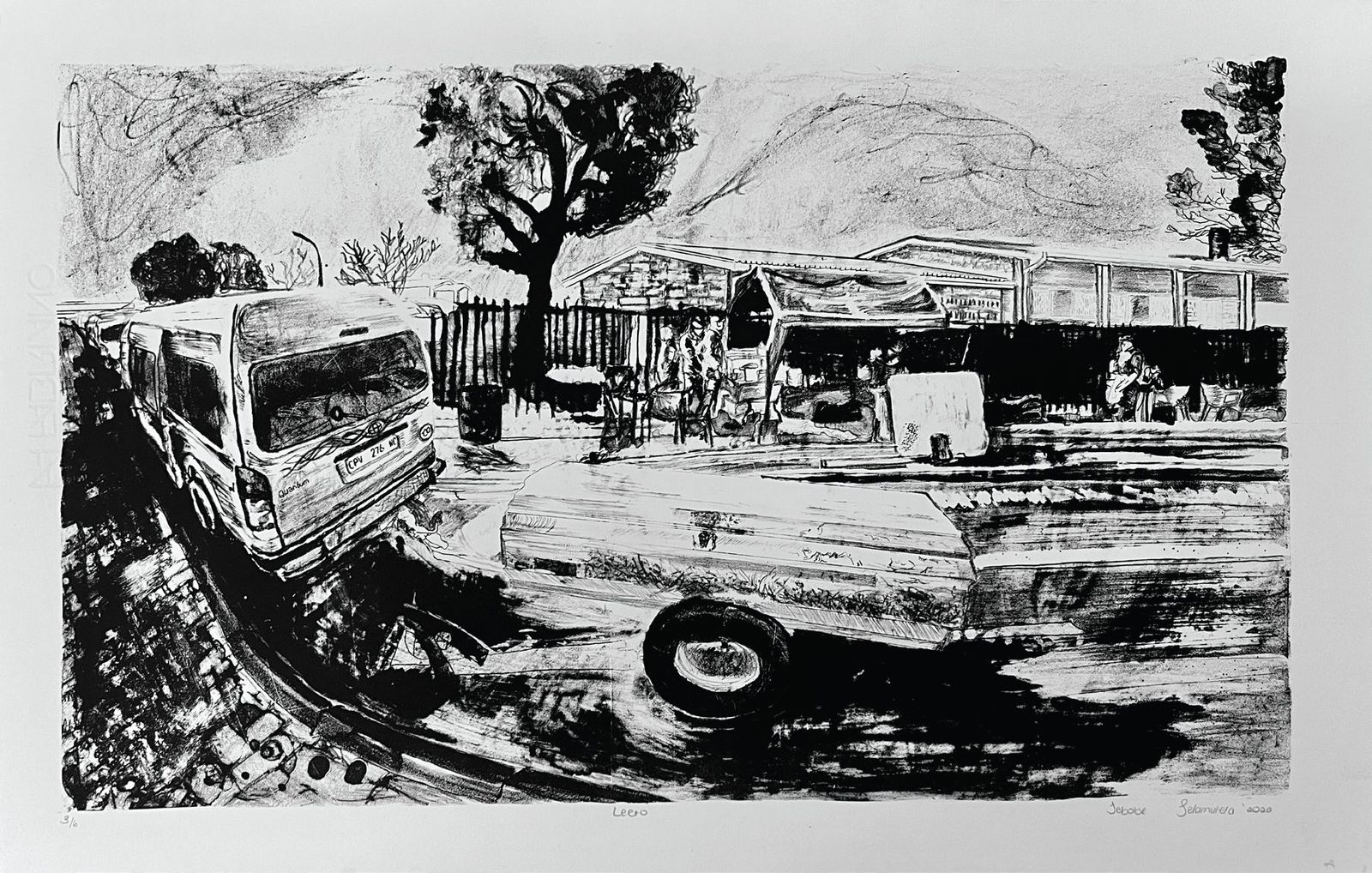
Leeto (the journey)
Sebotse Selamulela
R2,500
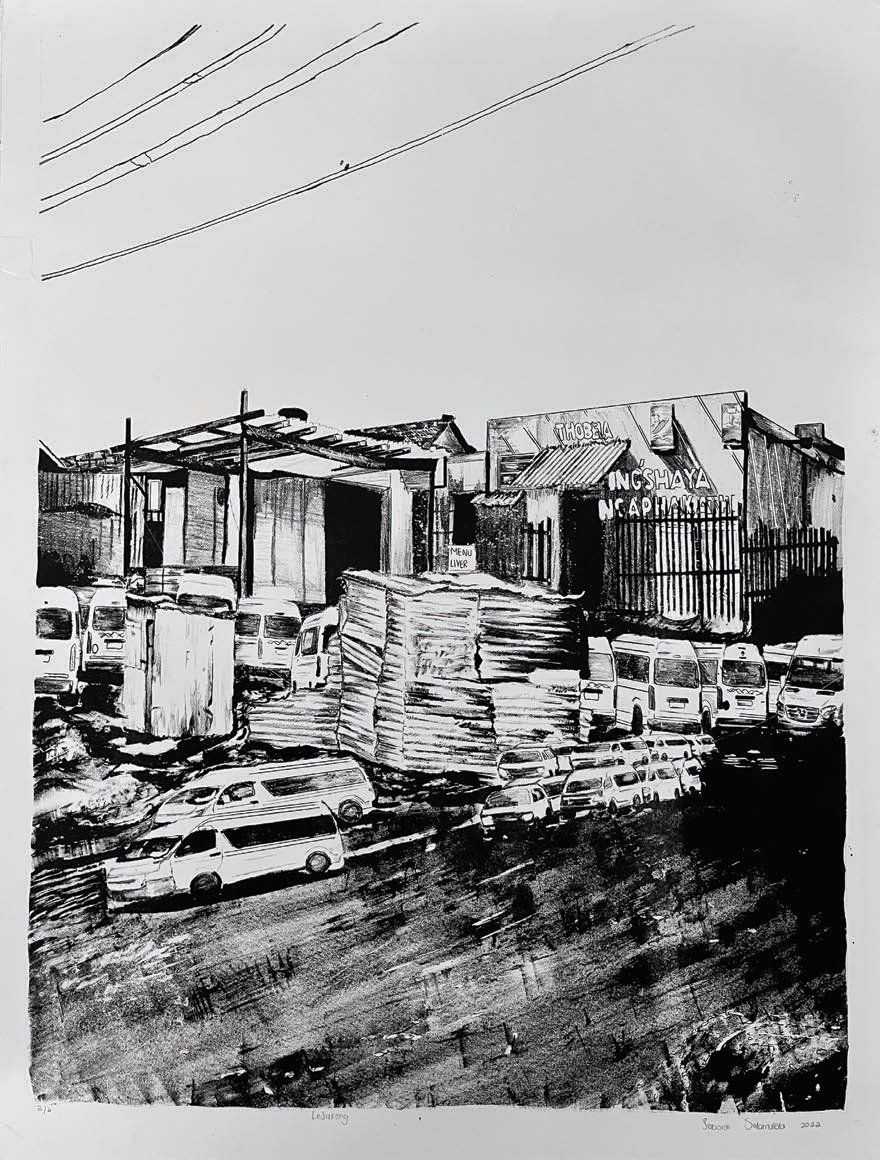
Lešakeng (the kraal)
Sebotse Selamulela
R1,000
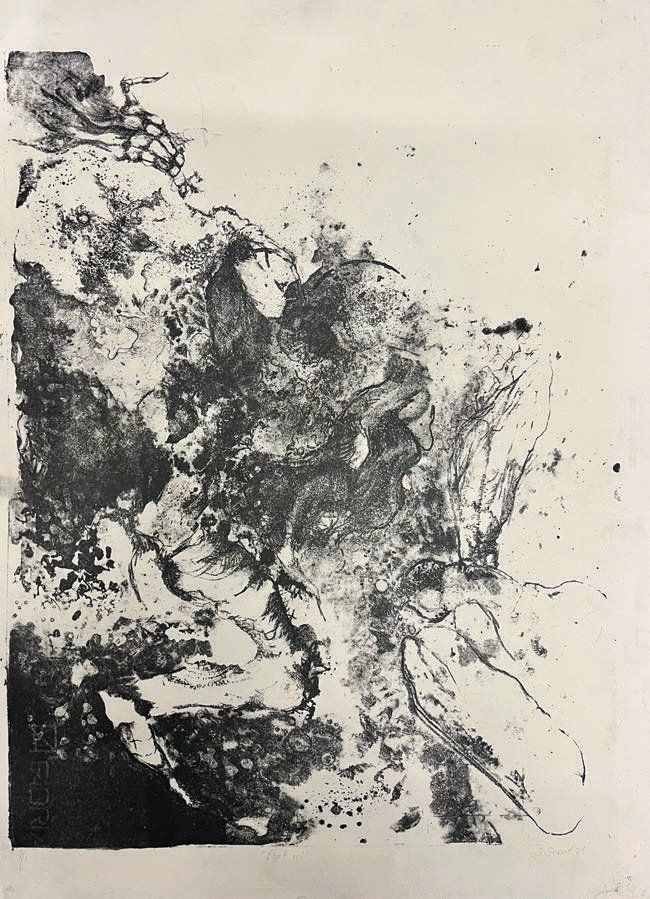
Part II
Siobhan Swart
R1,300
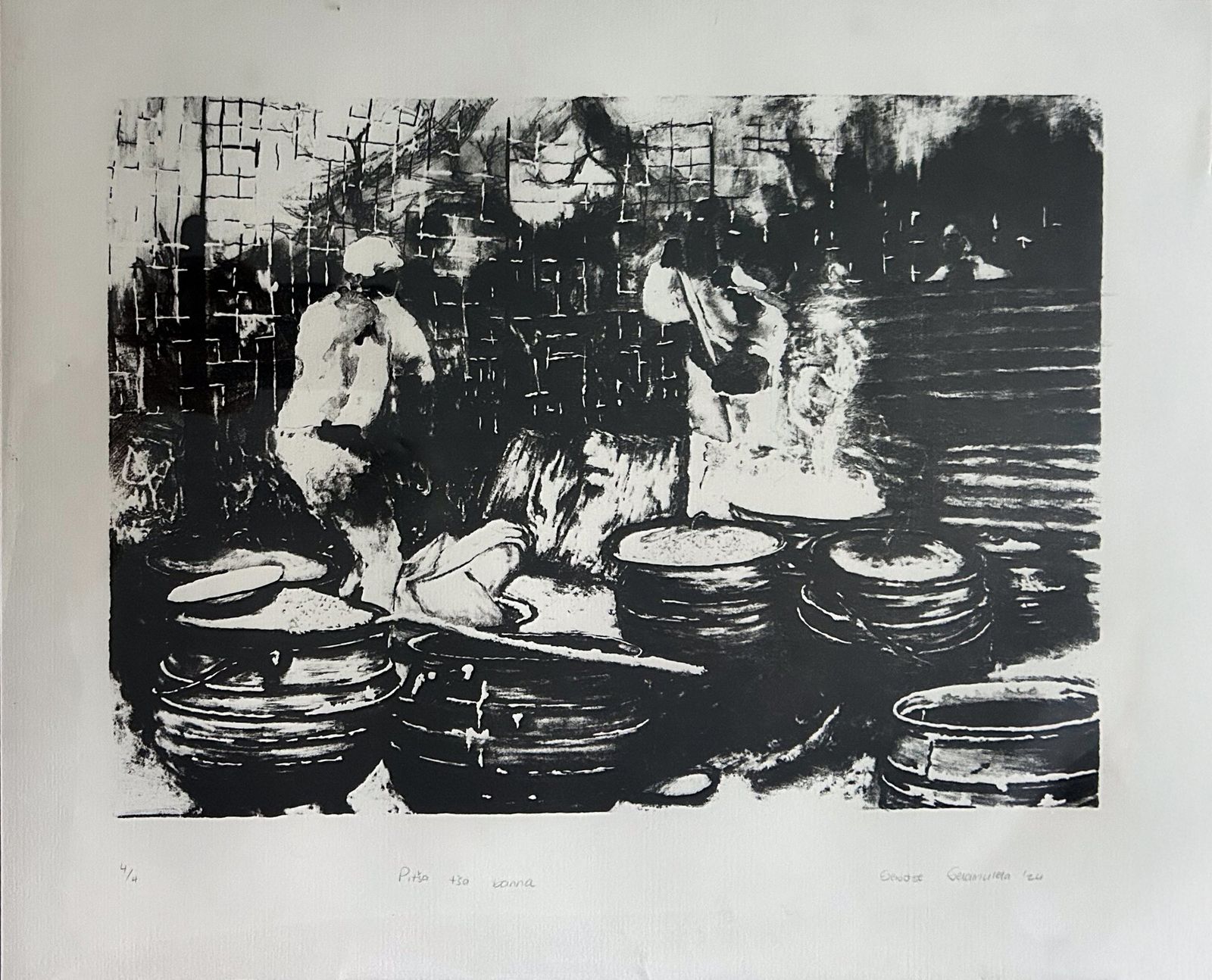
Pitšeng tša Banna
Sebotse Selamulela
R3,500
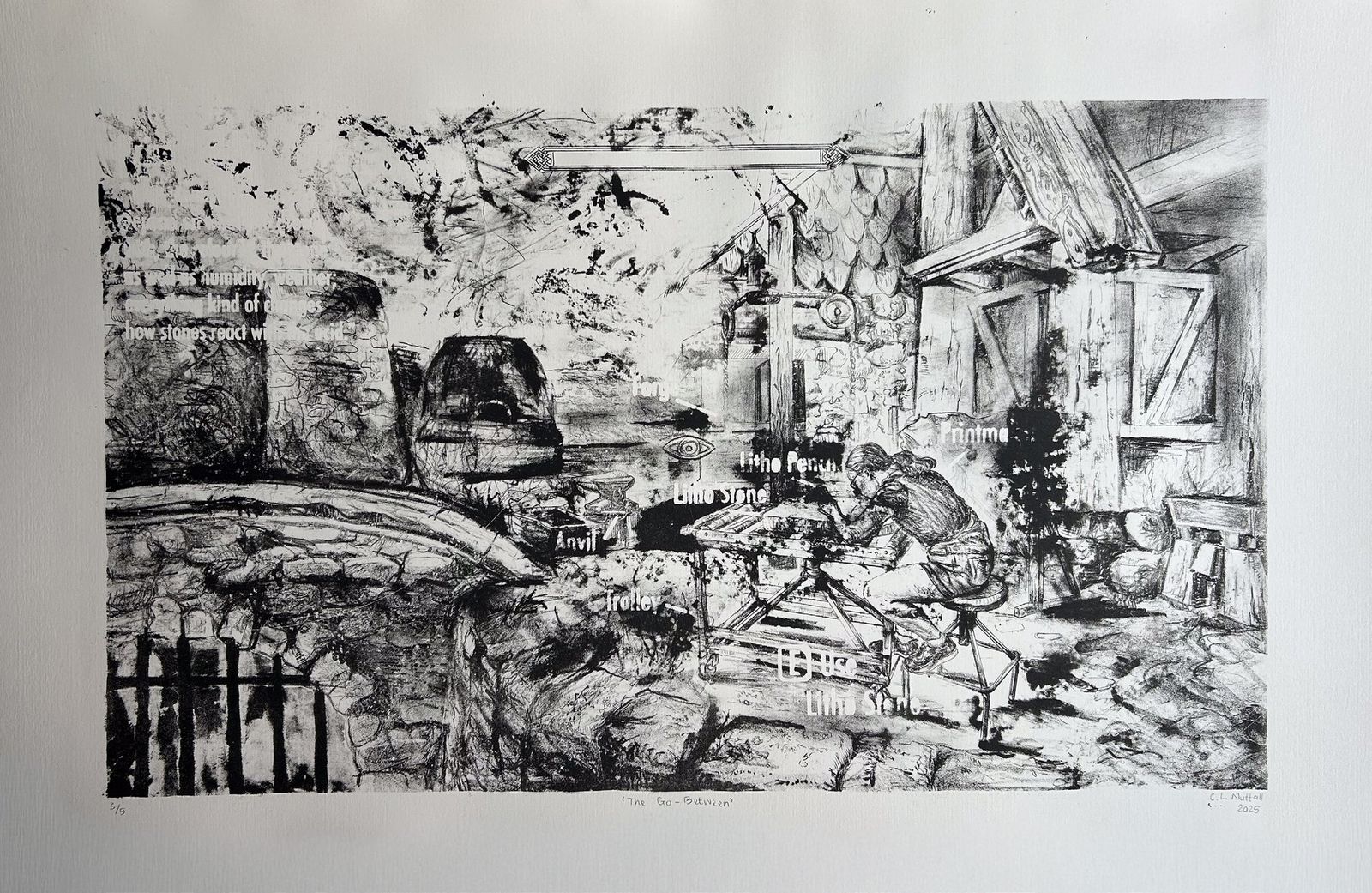
The Go-Between
Cailyn Nuttall
R2,000
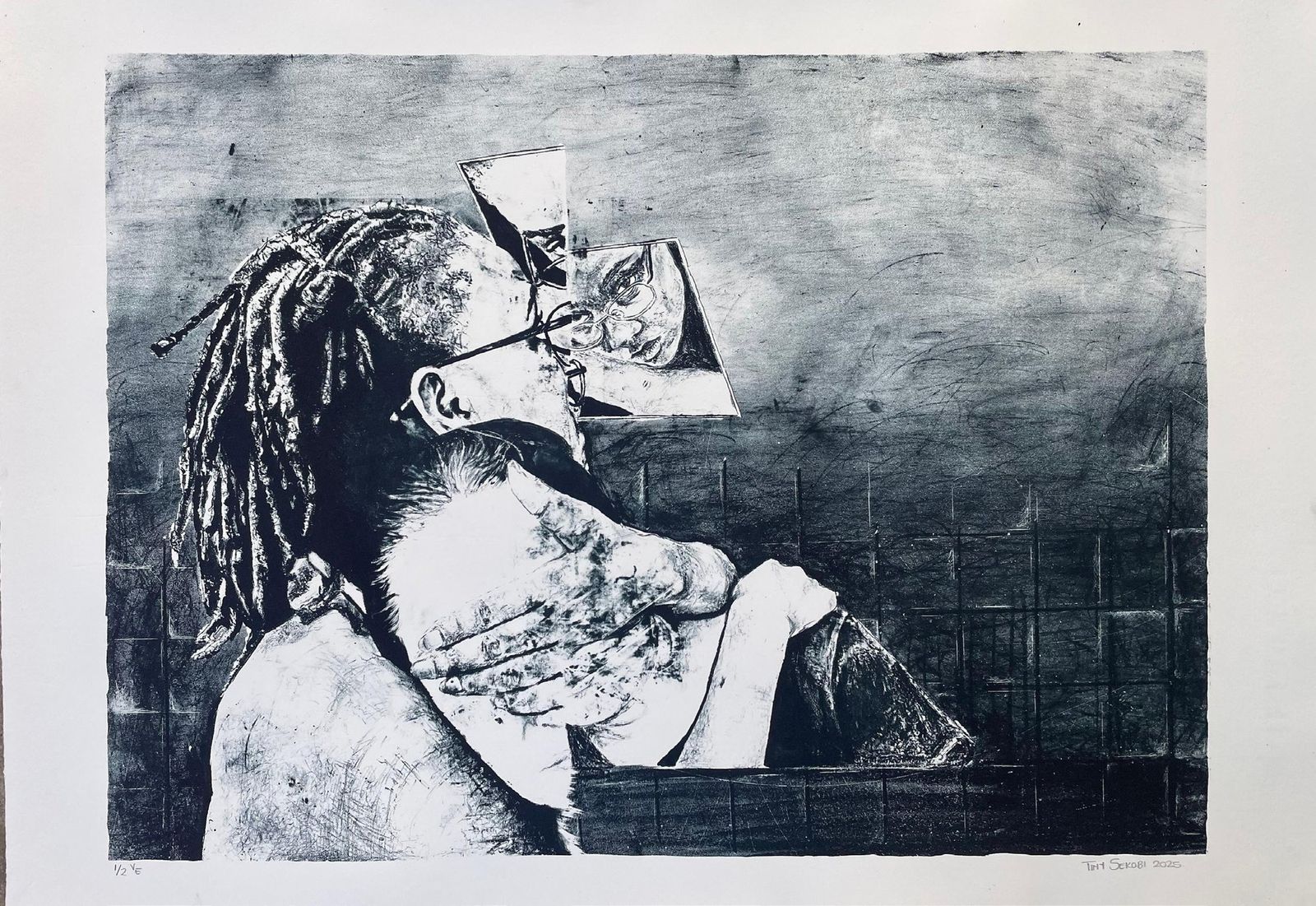
What was never meant to be known
Tinyiko Girly Sekobi
R14,000