GEL PLATE MONOTYPE
THE MEDIUM & ITS HISTORY
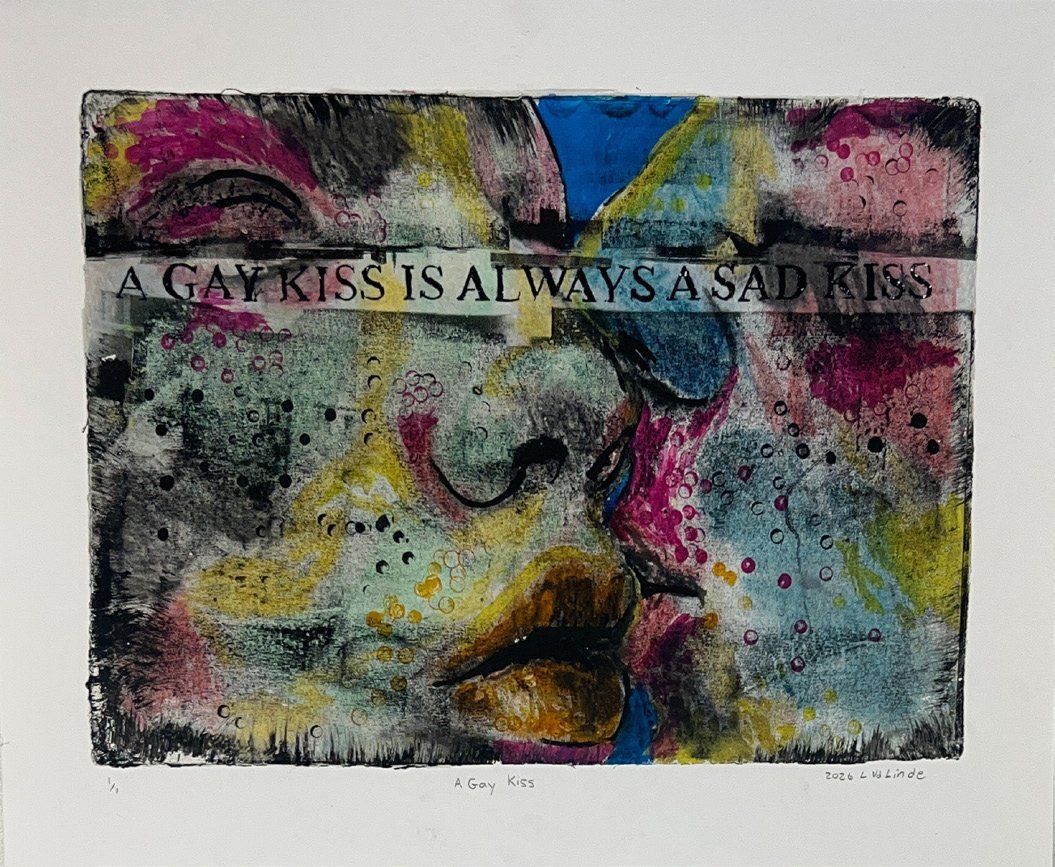
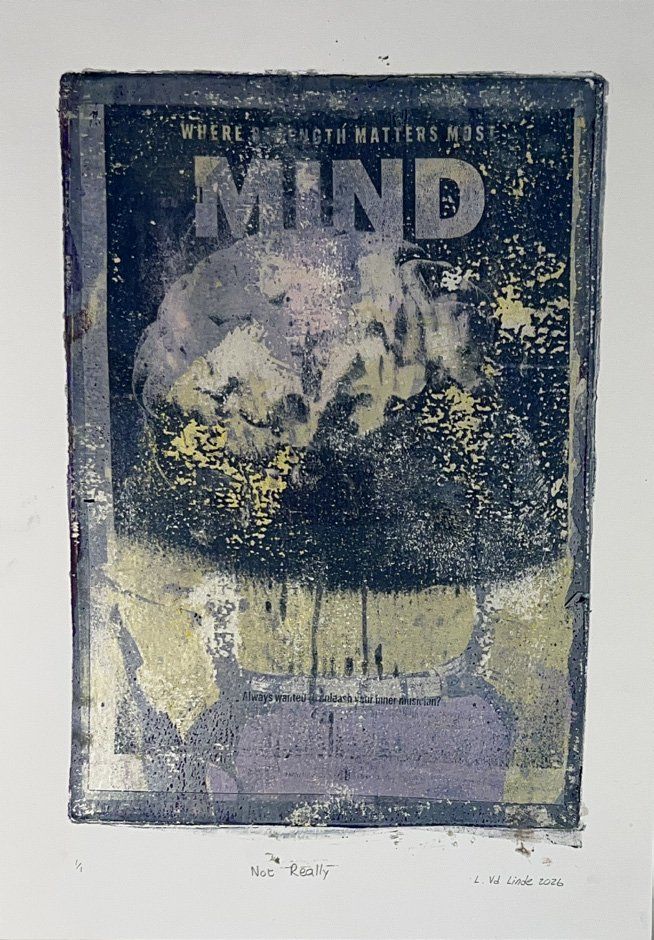
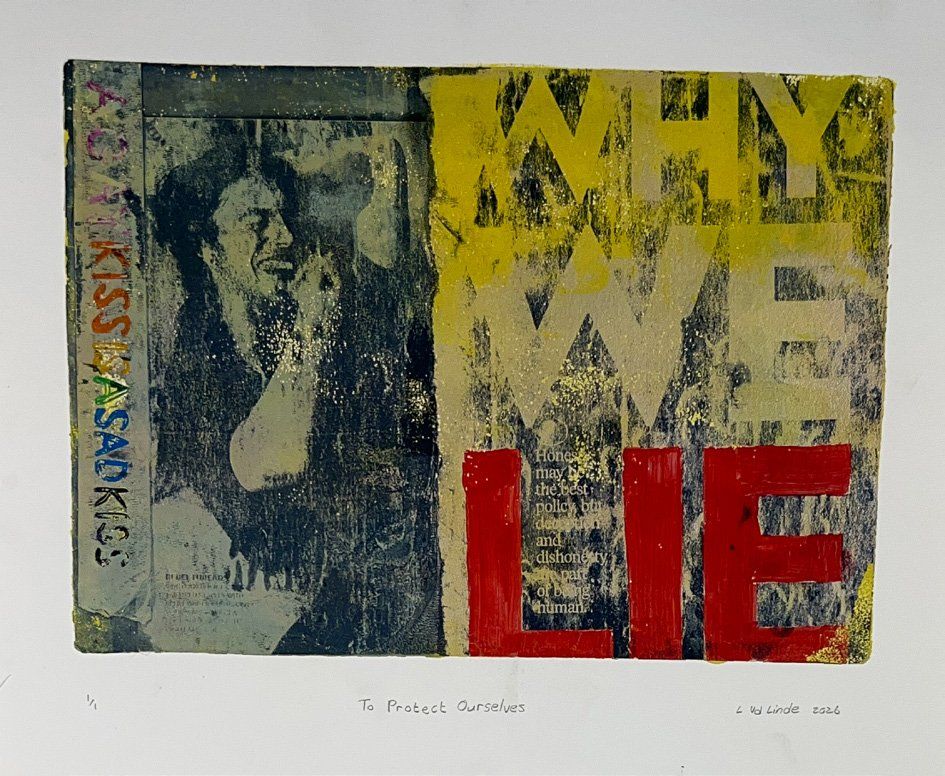
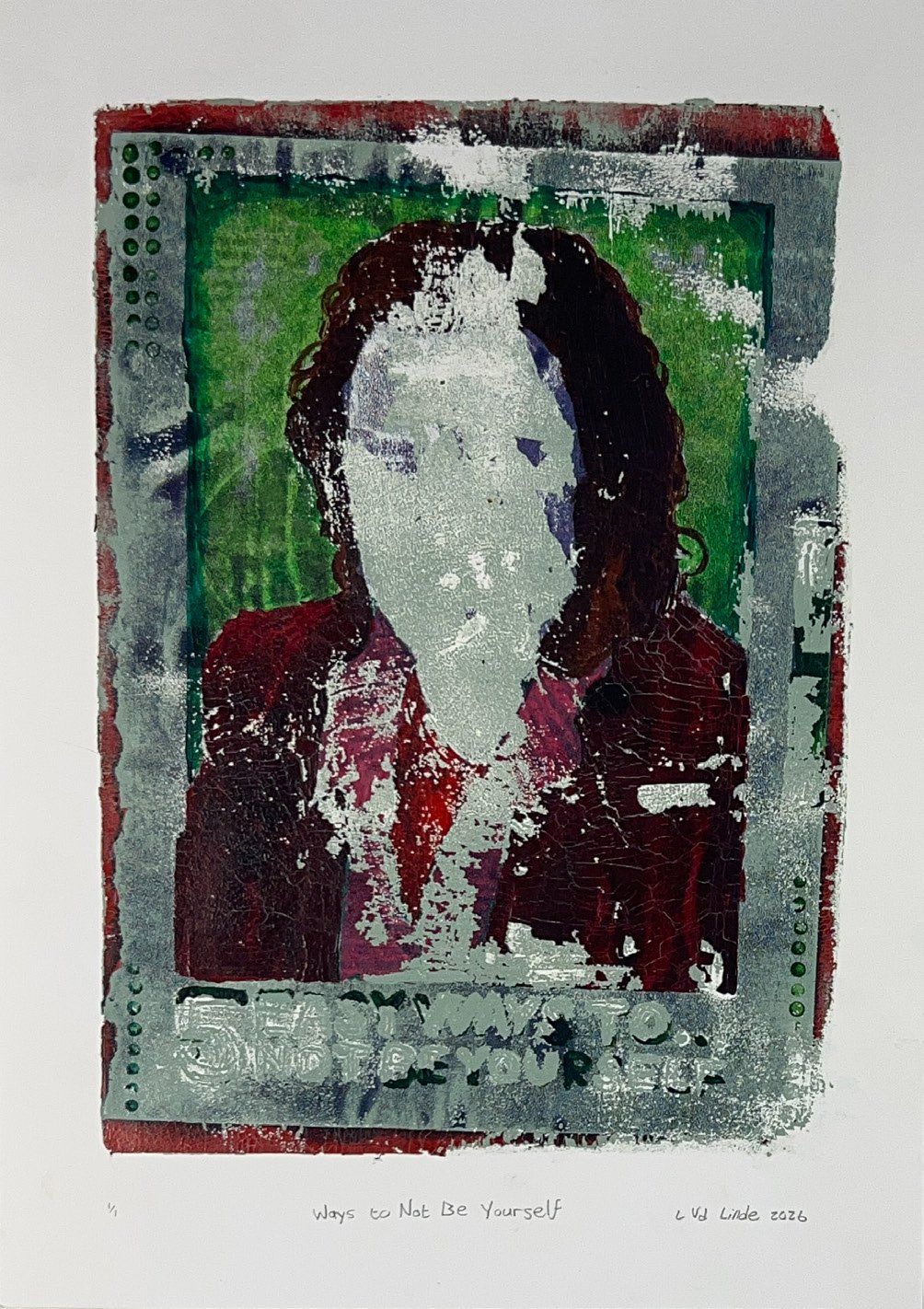
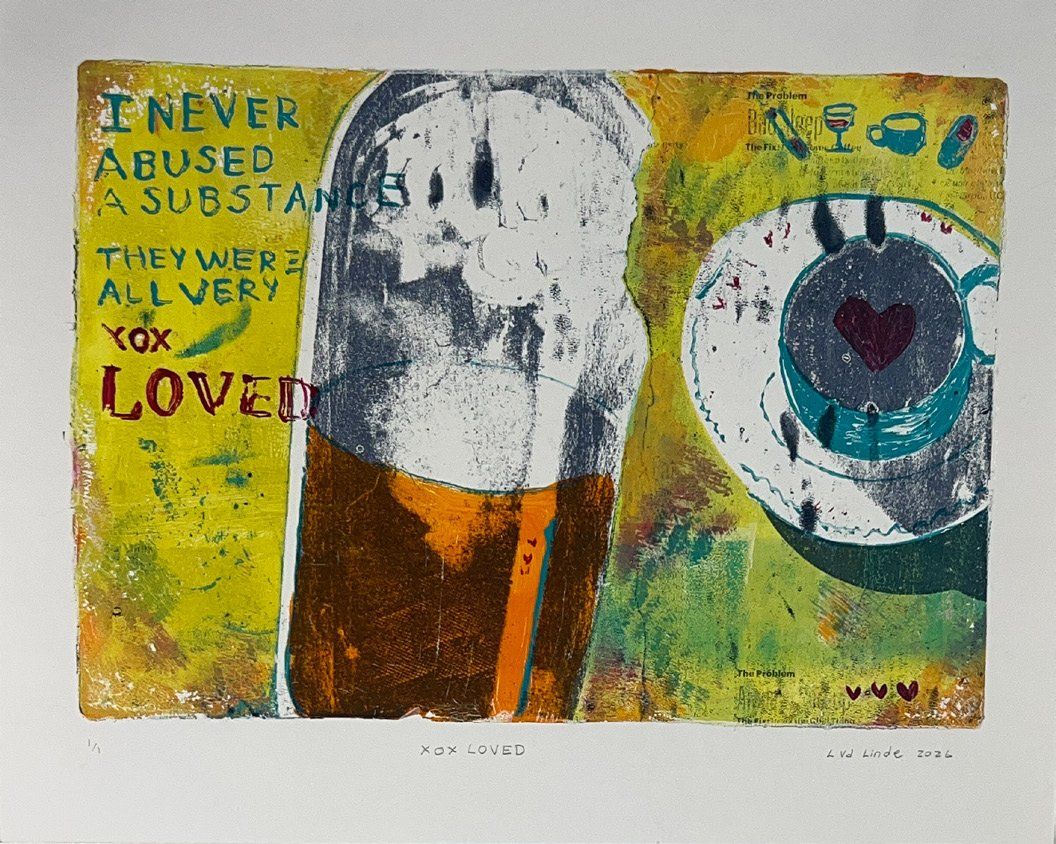
The gel plate monotype is the most recent technique in this exhibition, emerging as a widely used artistic medium only in the early 21st century. It follows the same fundamental principle as the traditional monotype with ink applied to a surface, paper pressed onto it, image transferred, but replaces the hard metal or glass plate with a soft, flexible plate made from gelatine or a synthetic equivalent. This soft surface creates a distinctly different printed quality: textures transfer readily, multiple layers can be built up, and found objects, leaves, fabric, and other materials can be pressed into the gel to create unexpected marks. Gel plates are reusable and require no press and the image can be transferred simply by hand pressure, making the technique highly accessible and well suited to experimentation. Artists working with gel plates often employ a resist method, laying down stencils, cut paper, or found objects before applying ink, so that the lifted plate leaves a ghost of those forms in the final print. The gel plate monotype has been adopted enthusiastically in art education and by contemporary artists interested in process-led, experimental, and mixed-media approaches to printmaking. Works in this exhibition made using the gel plate technique push at the boundaries between printmaking, collage, and painting, reflecting the medium's capacity for layering, chance, and surprise.
HOW IT IS MADE
- Roll ink or paint onto a gel plate.
- Add textures, stencils or found objects.
- Press paper onto the plate by hand.
- Lift the print and build further layers if desired.
AS A COLLECTOR
Look for layered textures, resist shapes and the interaction of chance and deliberate marks.