DRYPOINT

THE MEDIUM & ITS HISTORY
Drypoint is one of the most direct and intimate of all printmaking techniques. Unlike etching, which uses acid to bite into the plate, drypoint involves scratching directly into the surface of a metal or Perspex plate with a hard, sharp needle. No chemicals are involved and the image is made entirely by the pressure and movement of the artist's hand. The defining characteristic of drypoint is the burr: a ridge of displaced metal or Perspex that forms on either side of the scratched line. When the plate is inked, this burr catches and holds extra ink, producing a soft, velvety quality in the printed line that is unlike anything achievable in acid etching. Drypoint has been used since the 15th century and was favoured by Rembrandt, who combined it with etching to create some of his most expressive works. In the 20th century, the use of Perspex plates made the technique more accessible to students, since Perspex is easier to work than copper and requires no specialised equipment beyond the needle itself.
HOW IT IS MADE
- Scratch directly into a metal or Perspex plate with a needle.
- Ink the incised lines and their burr.
- Wipe the surface carefully.
- Print onto damp paper under pressure.
AS A COLLECTOR
Look for soft, velvety lines created by the burr.
IN THE COLLECTION
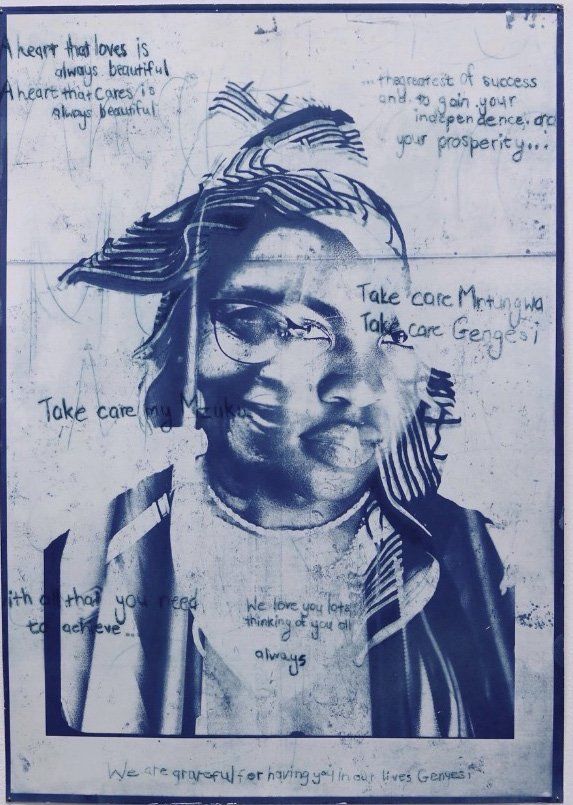
Digital Prayers
Mihlali Jiya
R4,000
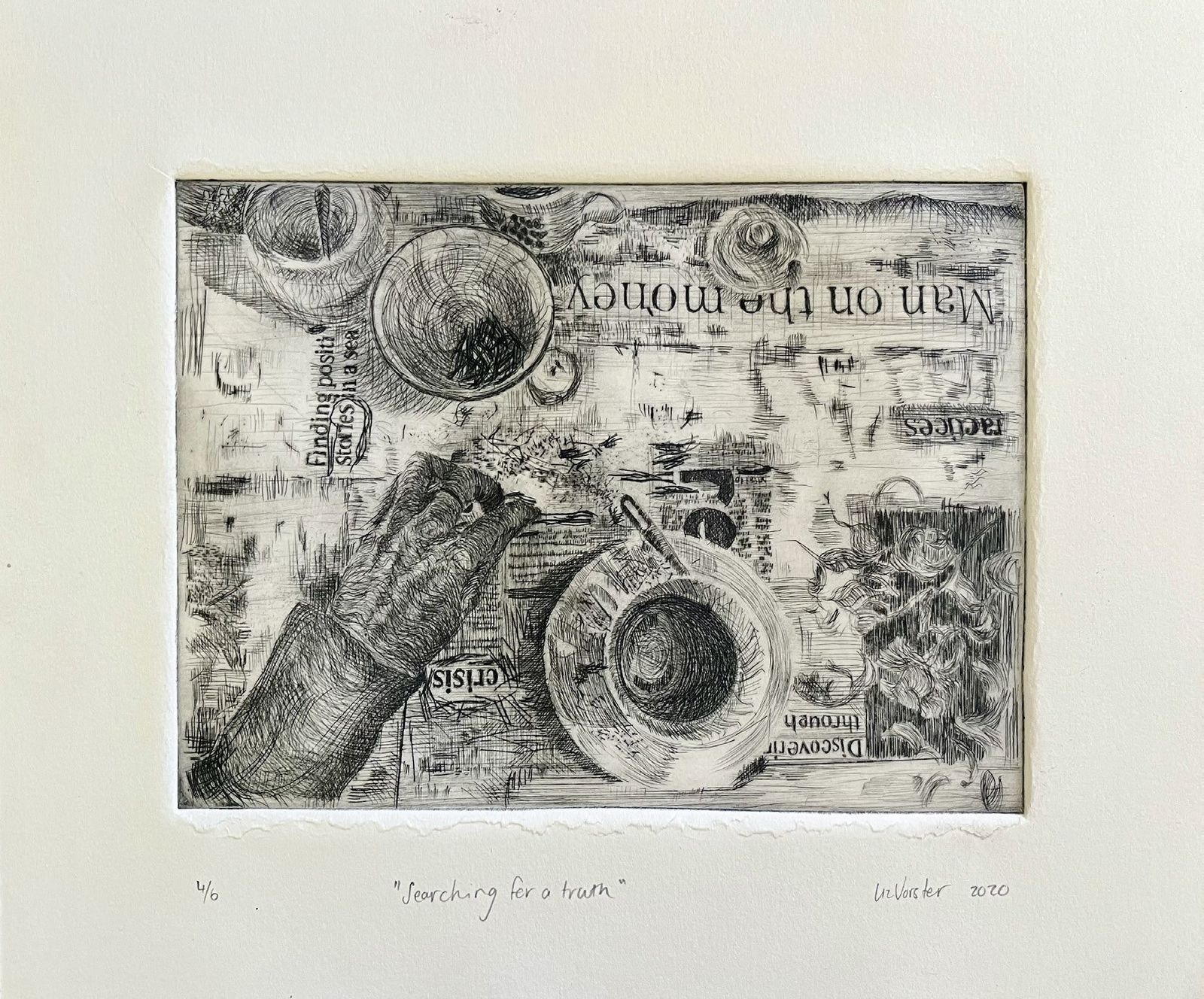
Searching for a truth
Liz Vorster
R1,450
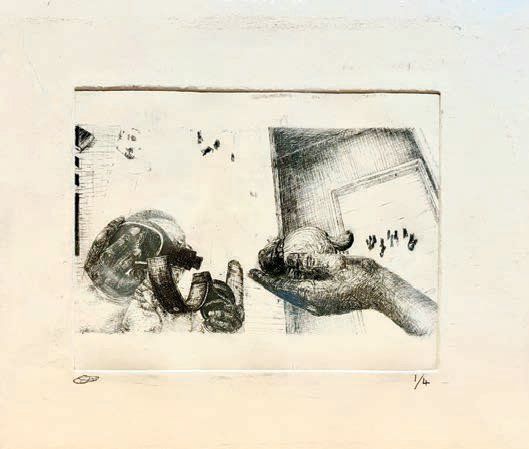
Sibling Rivalry
Sethu Menye
R800
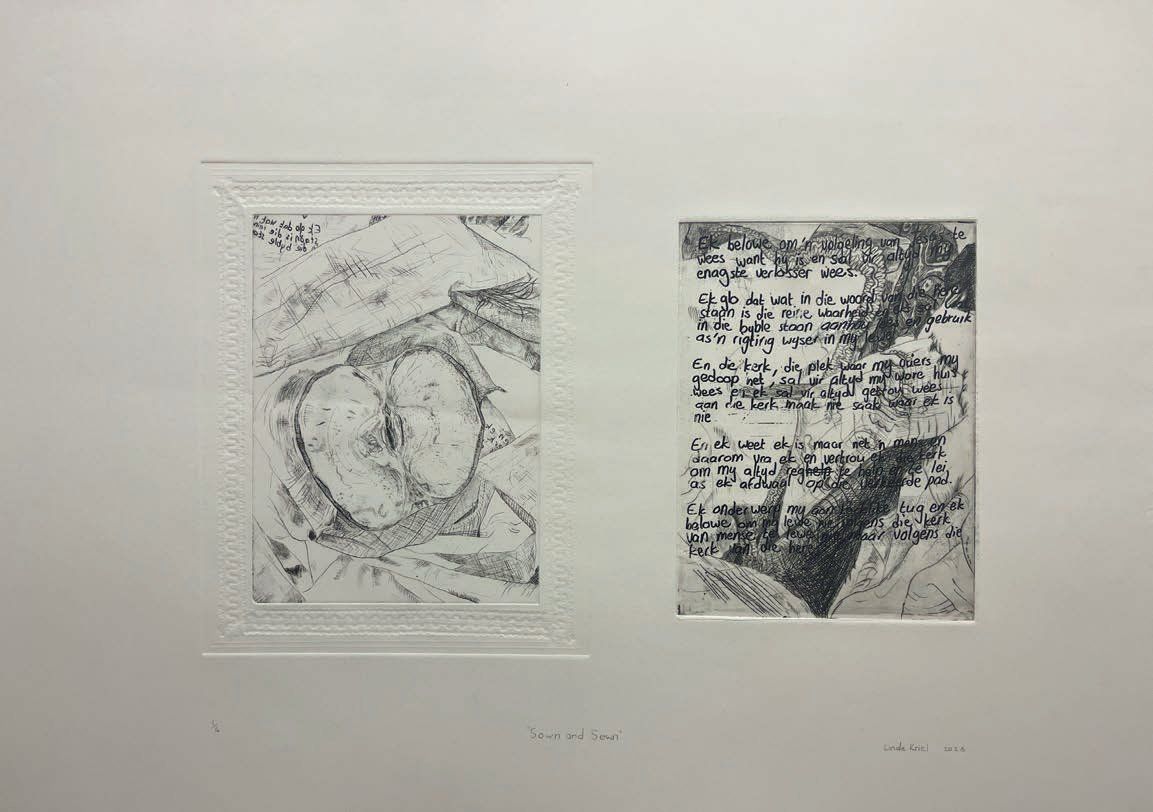
Sown and Sewn
Linde Kriel
R900
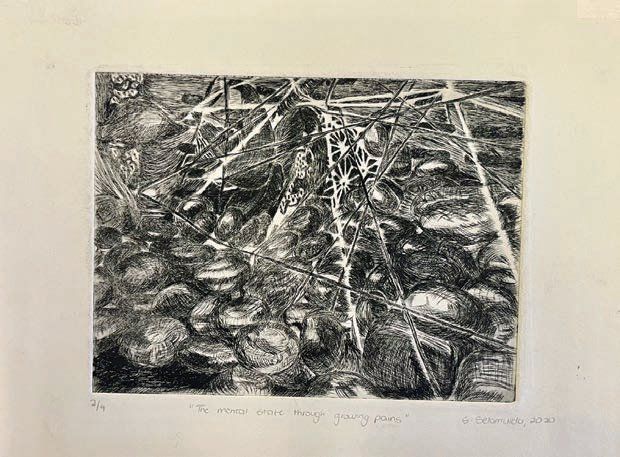
The mental statement through growing pains
Sebotse Selamulela
R300
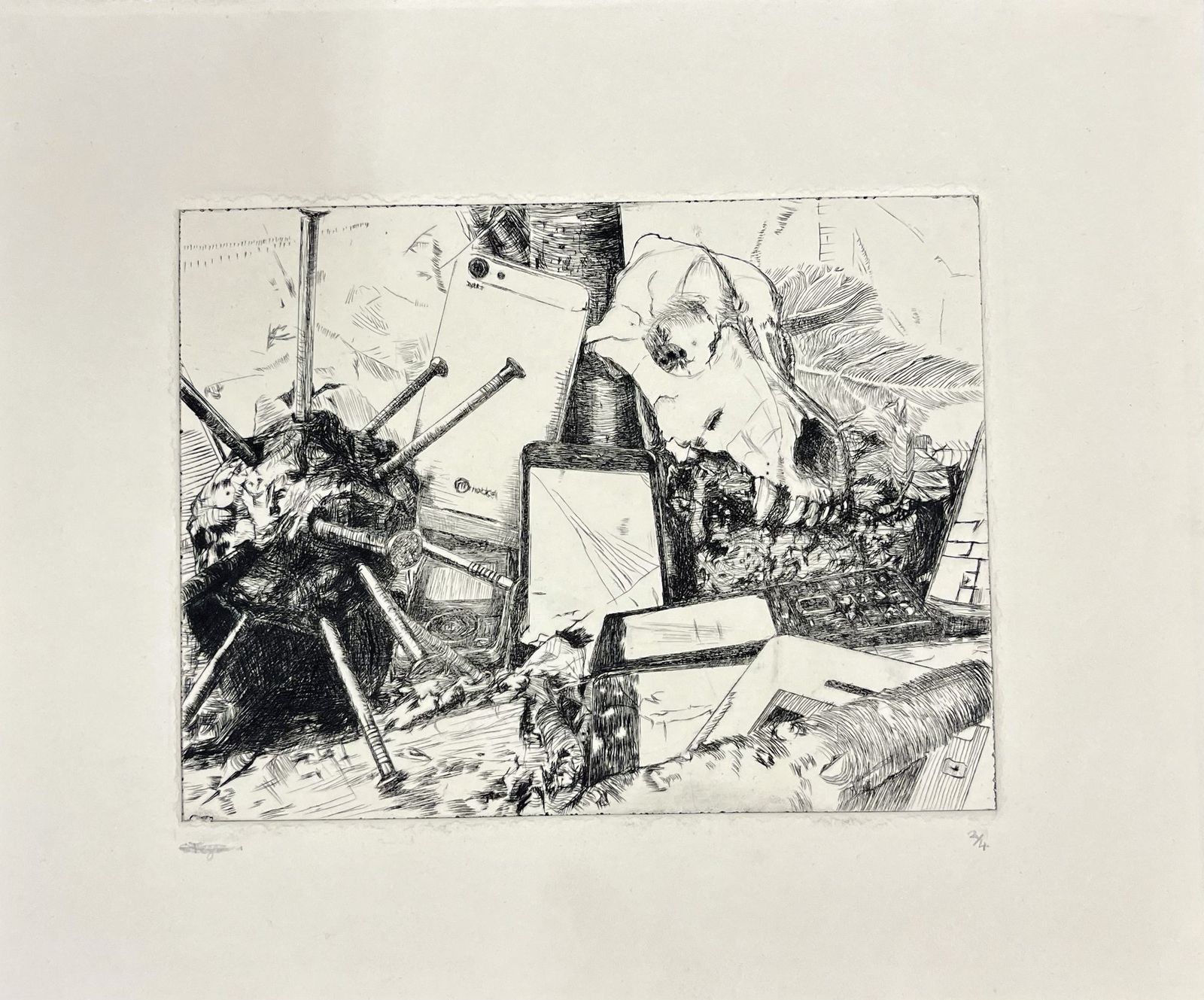
Untitled (drypoint)
Sibenoxolo Foji
R1,500
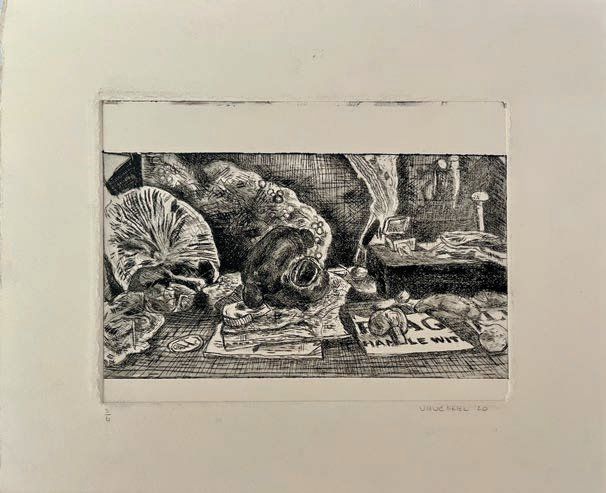
Untitled (drypoint)
Linde Kriel
R300
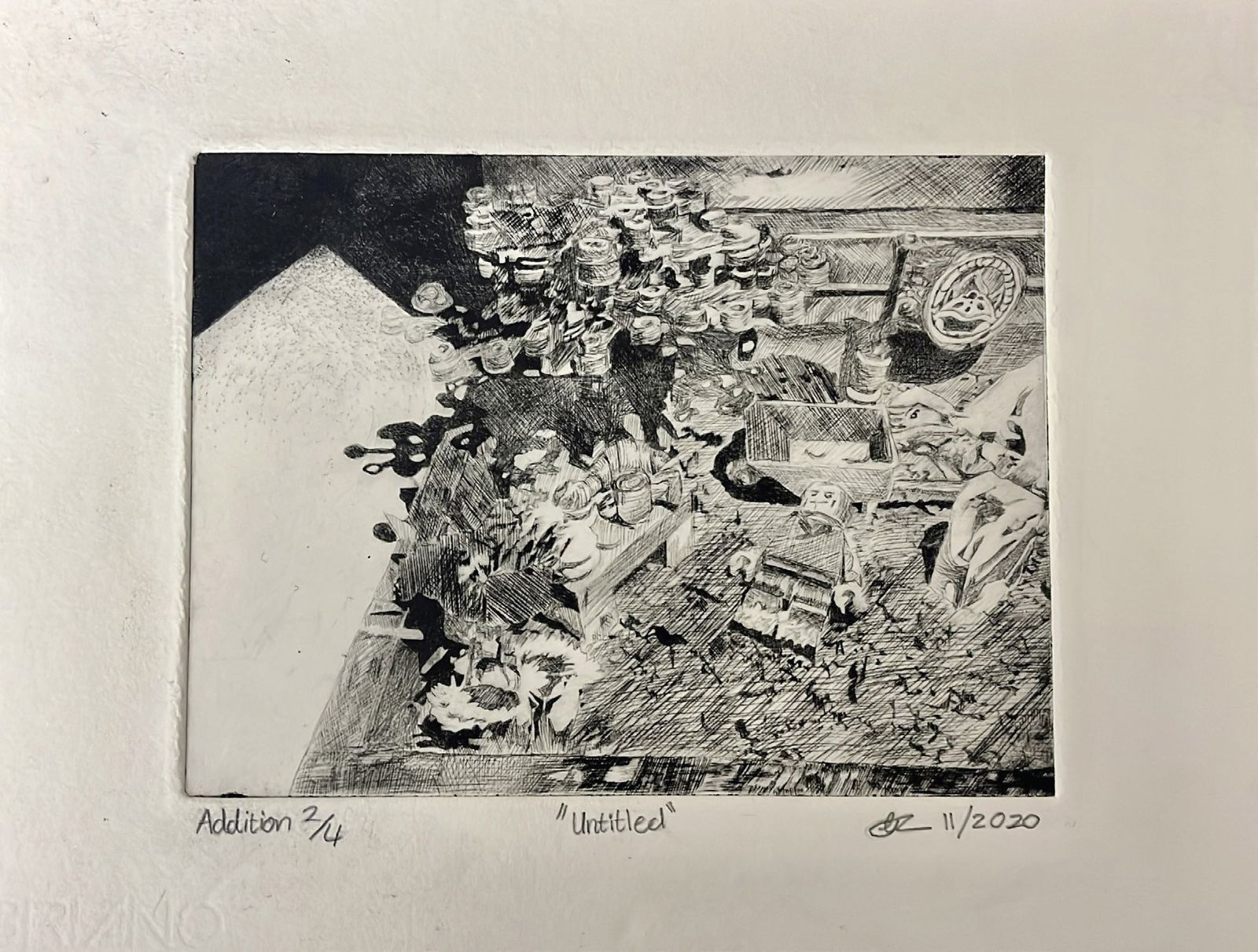
Untitled (drypoint)
Chiara Andriana Gagiano
R1,700