CYANOTYPE
THE MEDIUM & ITS HISTORY
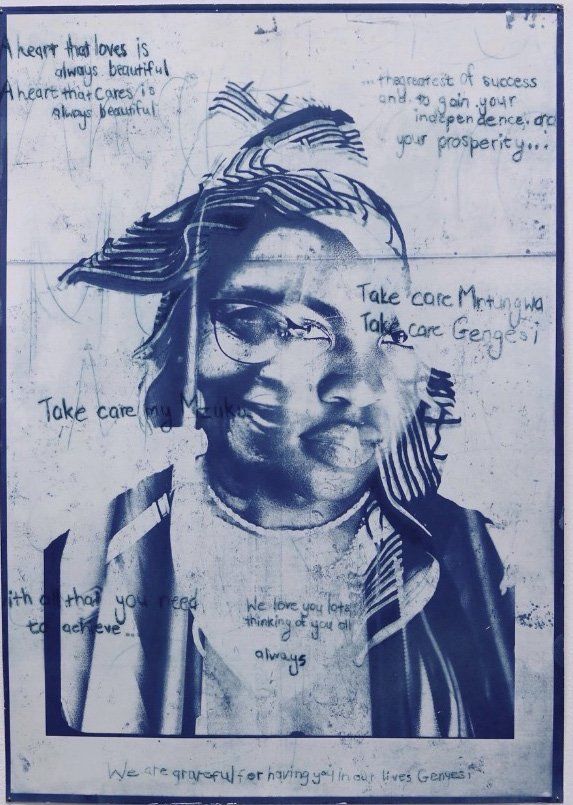
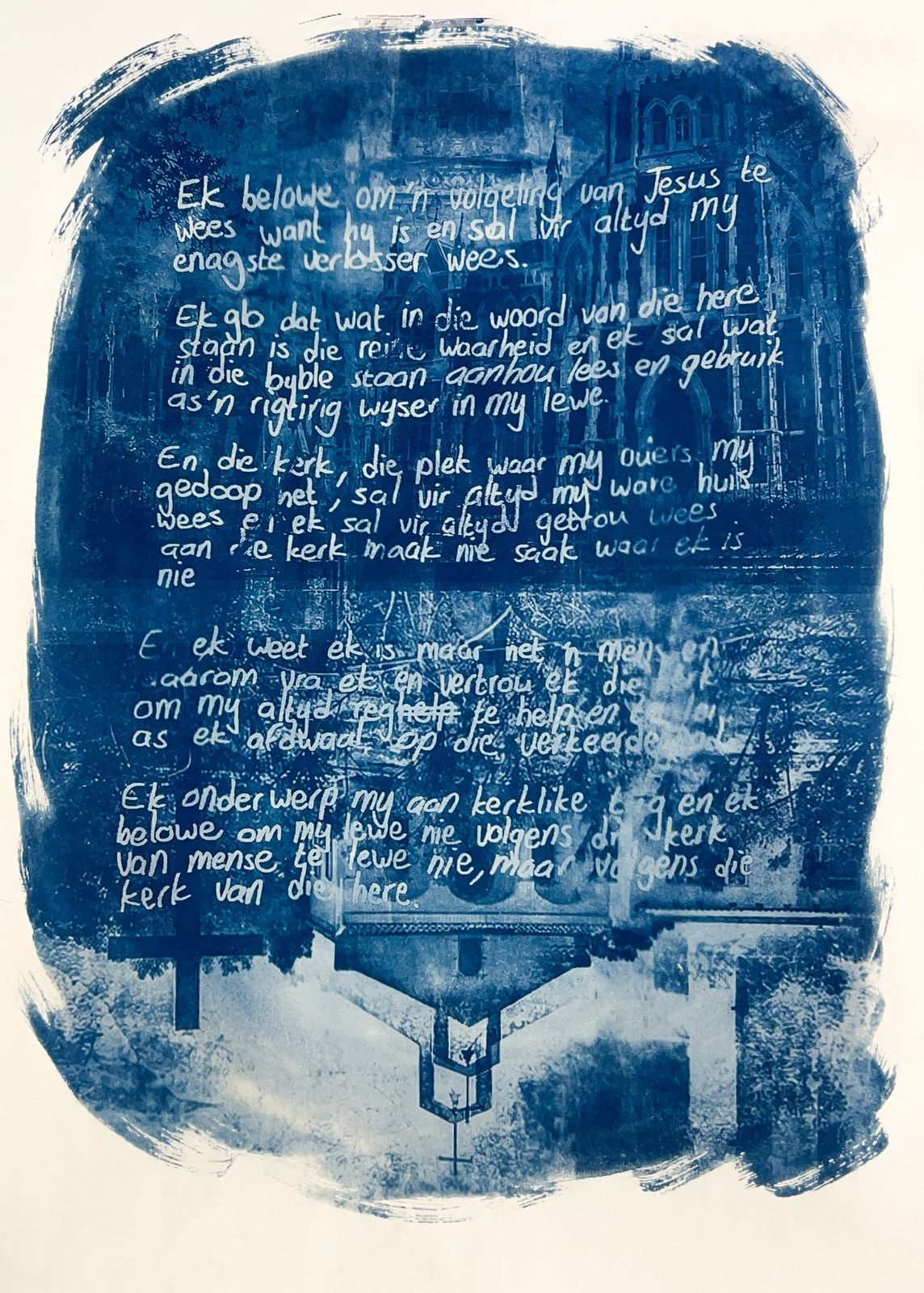
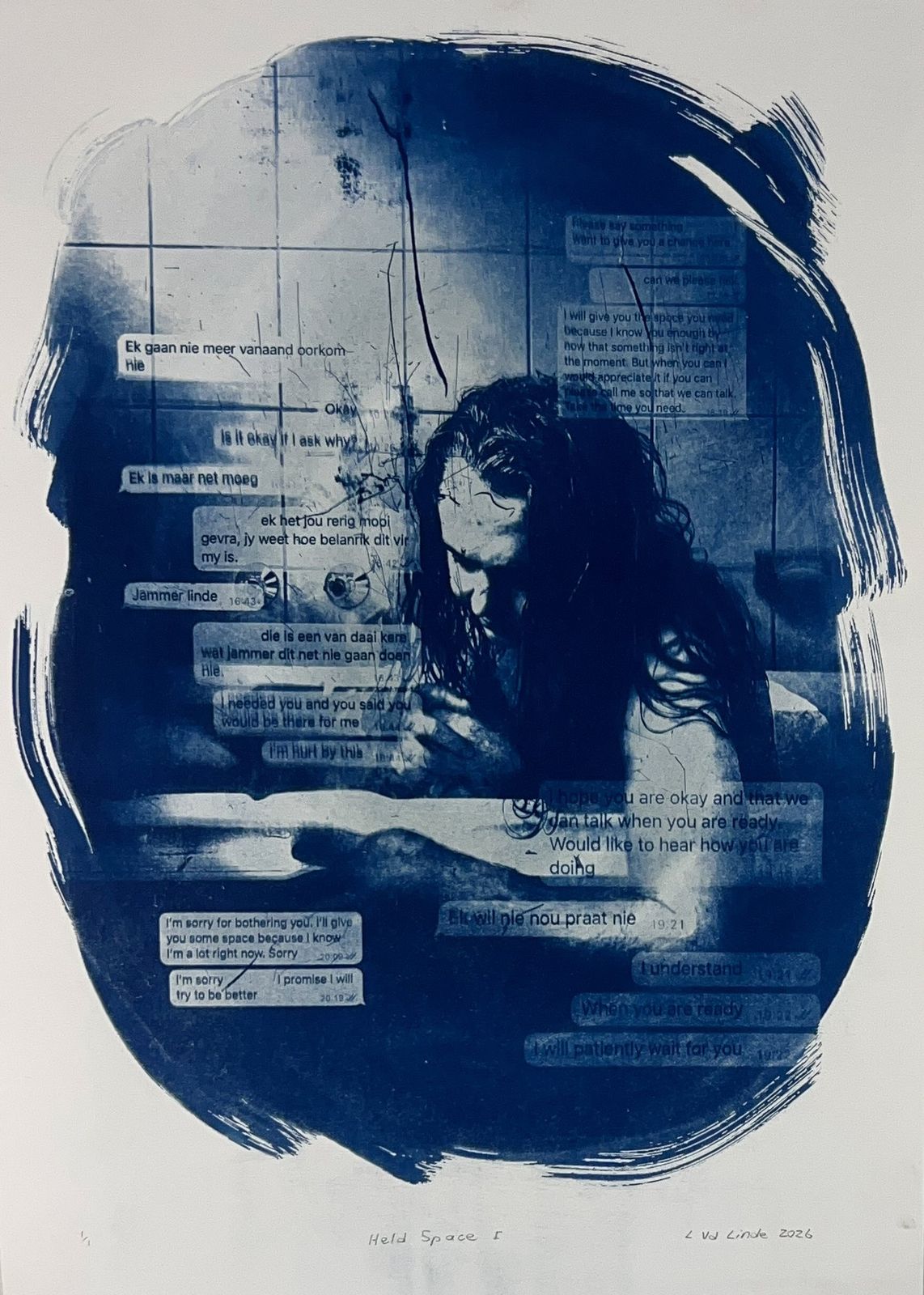
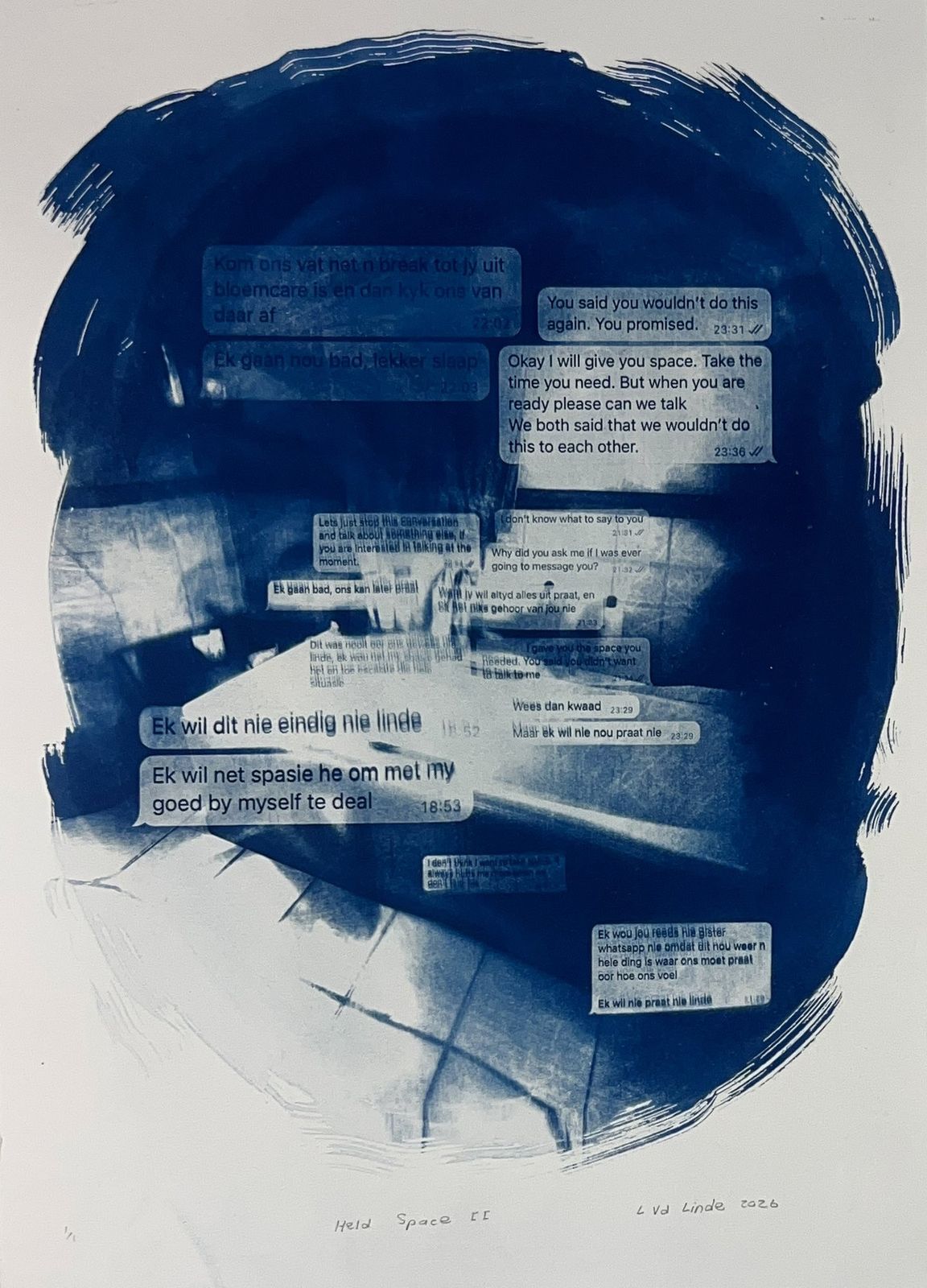
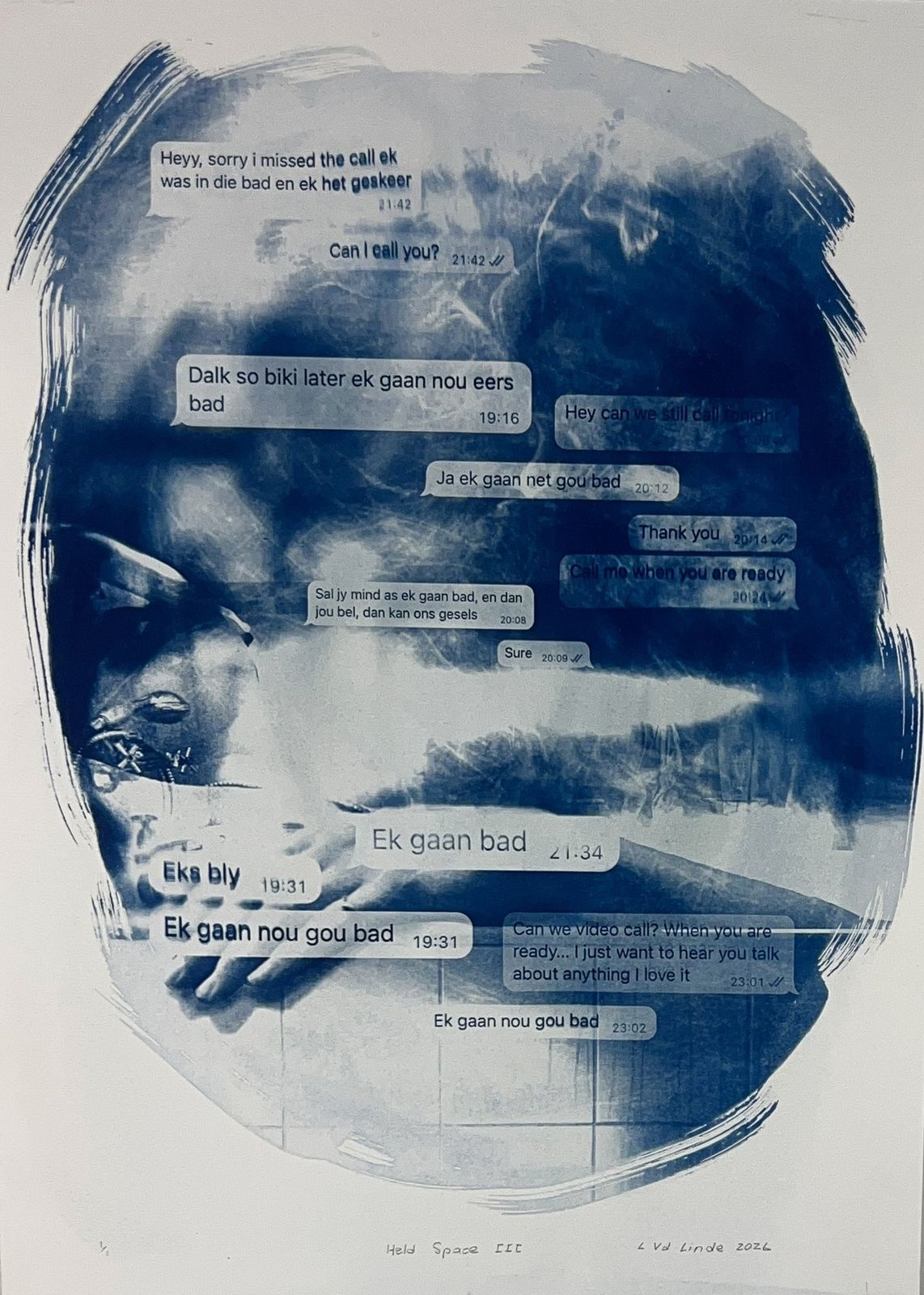
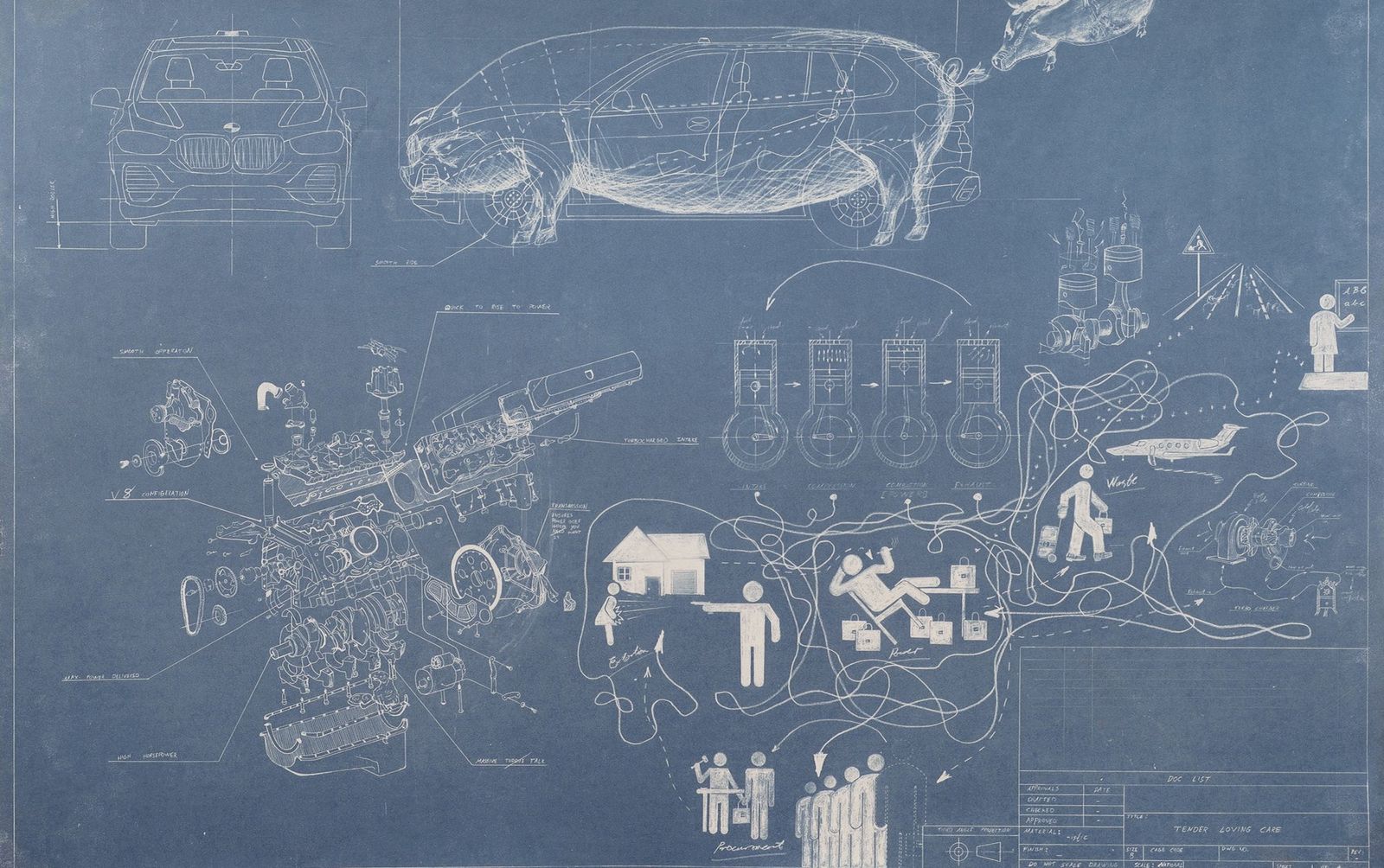
The cyanotype is the only technique in this exhibition that uses light rather than pressure to create an image, and it is also the oldest surviving photographic process still in common use. It was invented in 1842 by the British scientist and astronomer Sir John Herschel, who discovered that certain iron salts were sensitive to ultraviolet light and could be fixed with water to create a stable blue image. His colleague Anna Atkins used the process almost immediately to create the first photographically illustrated book which had a collection of cyanotype prints of algae published in 1843, making her one of the first photographers in history. The process is simple but beautiful. A surface, most commonly paper or fabric, is coated with a solution of two iron compounds and allowed to dry in the dark. Objects, negatives, or translucent materials are then placed on the coated surface and exposed to sunlight or ultraviolet light. Where light strikes the surface, the chemistry reacts and turns a deep Prussian blue. Where objects block the light, the surface remains pale. The print is developed simply by rinsing in water, which washes away the unexposed chemicals and fixes the image. The resulting prints are characterised by their distinctive deep blue, the colour that gives the process its name, from the Greek kyanos, meaning dark blue, and by the directness of the photograms they can produce: objects pressed against the surface leave their exact silhouette, creating prints of extraordinary intimacy and presence. In this exhibition, cyanotype works bridge the traditions of printmaking, photography, and drawing, offering a closing reflection on what it means to leave a mark.
HOW IT IS MADE
- Coat paper or fabric with light-sensitive iron solutions.
- Allow the coated surface to dry in darkness.
- Arrange objects or a negative on the surface.
- Expose it to sunlight or ultraviolet light.
- Rinse in water to develop the image and dry.
AS A COLLECTOR
Look for the distinctive blue and the quality of silhouettes or photographic detail.